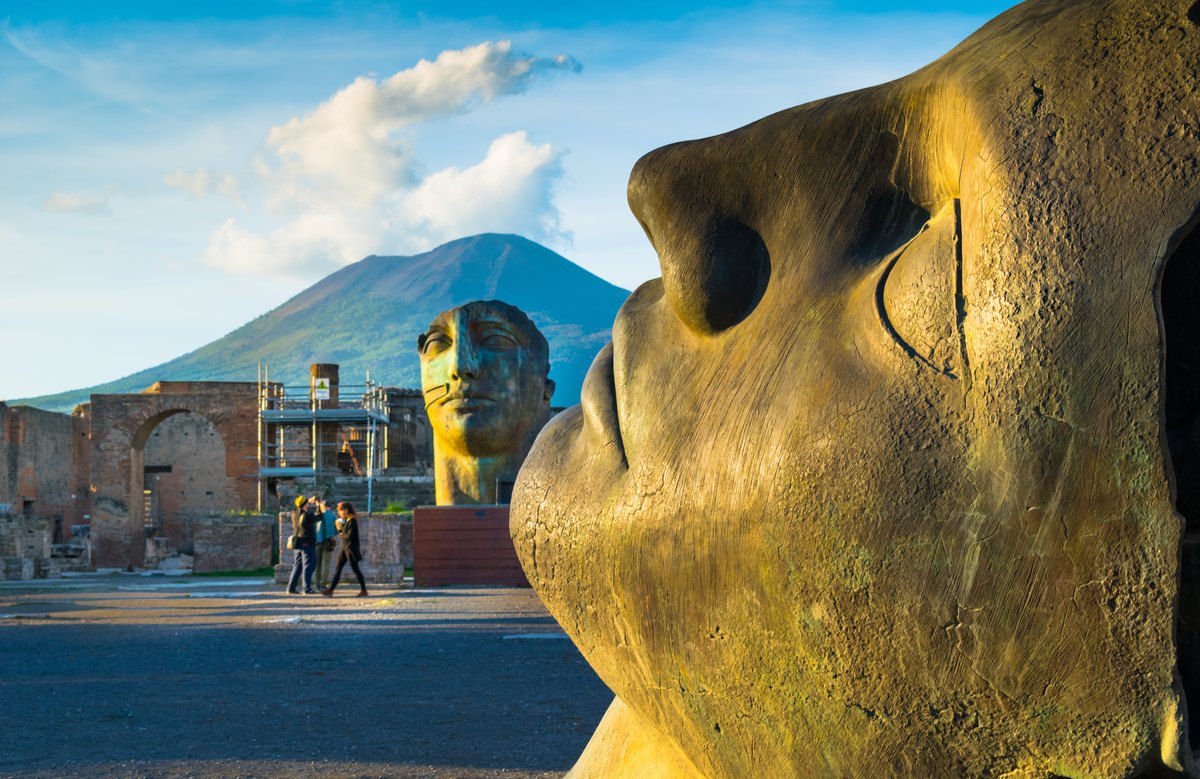
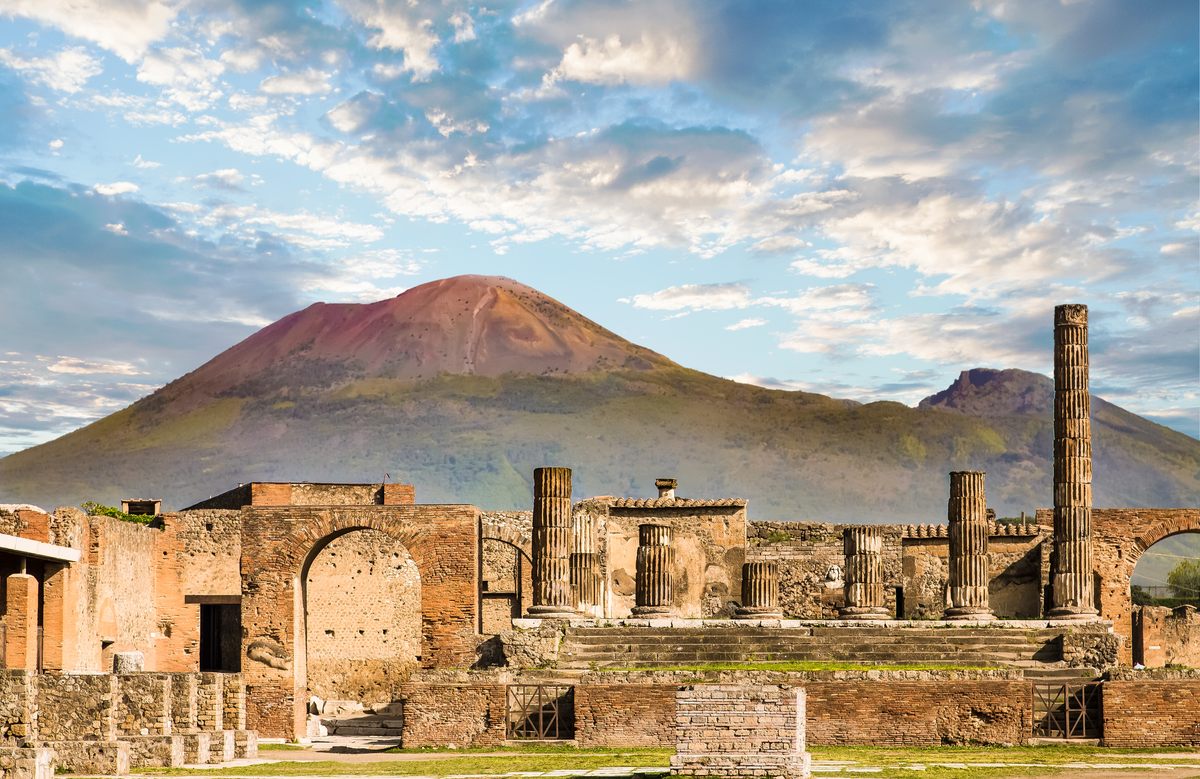
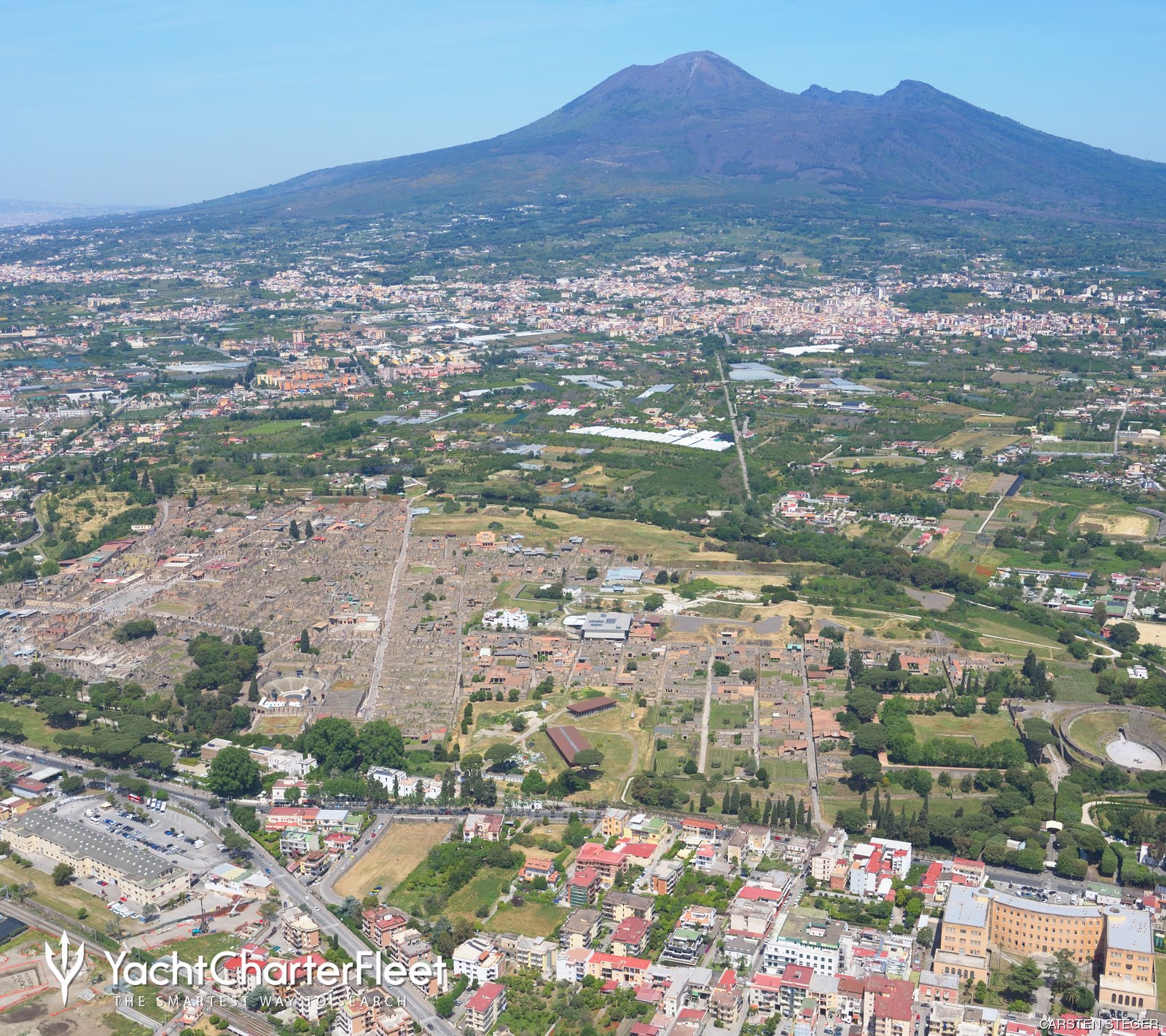
In 79 AD, a catastrophic eruption of Mount Vesuvius buried the thriving Roman city of Pompeii under four to six meters of volcanic ash and pumice. The sudden blanket of debris sealed the urban complex for nearly 1,700 years, preserving streets, houses, wall paintings, and organic artifacts in extraordinary detail. Rediscovered in the late 16th century and systematically excavated since 1748, the archaeological site reveals the daily routines, civic organization, and social structure of first-century Roman society.
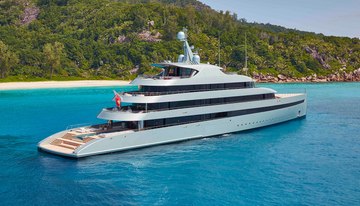
Located five kilometers inland from the Bay of Naples, the ancient city once sat directly on the coast before volcanic deposits altered the shoreline. Marina di Stabia sits just six kilometers south of the main entrance, providing a convenient coastal base where a Naples yacht charter transitions into an overland historical tour. Visitors disembarking at nearby harbor facilities can reach the ruins in under 15 minutes by private car or local train, trading views of the volcanic bay for the stone-paved avenues of antiquity.
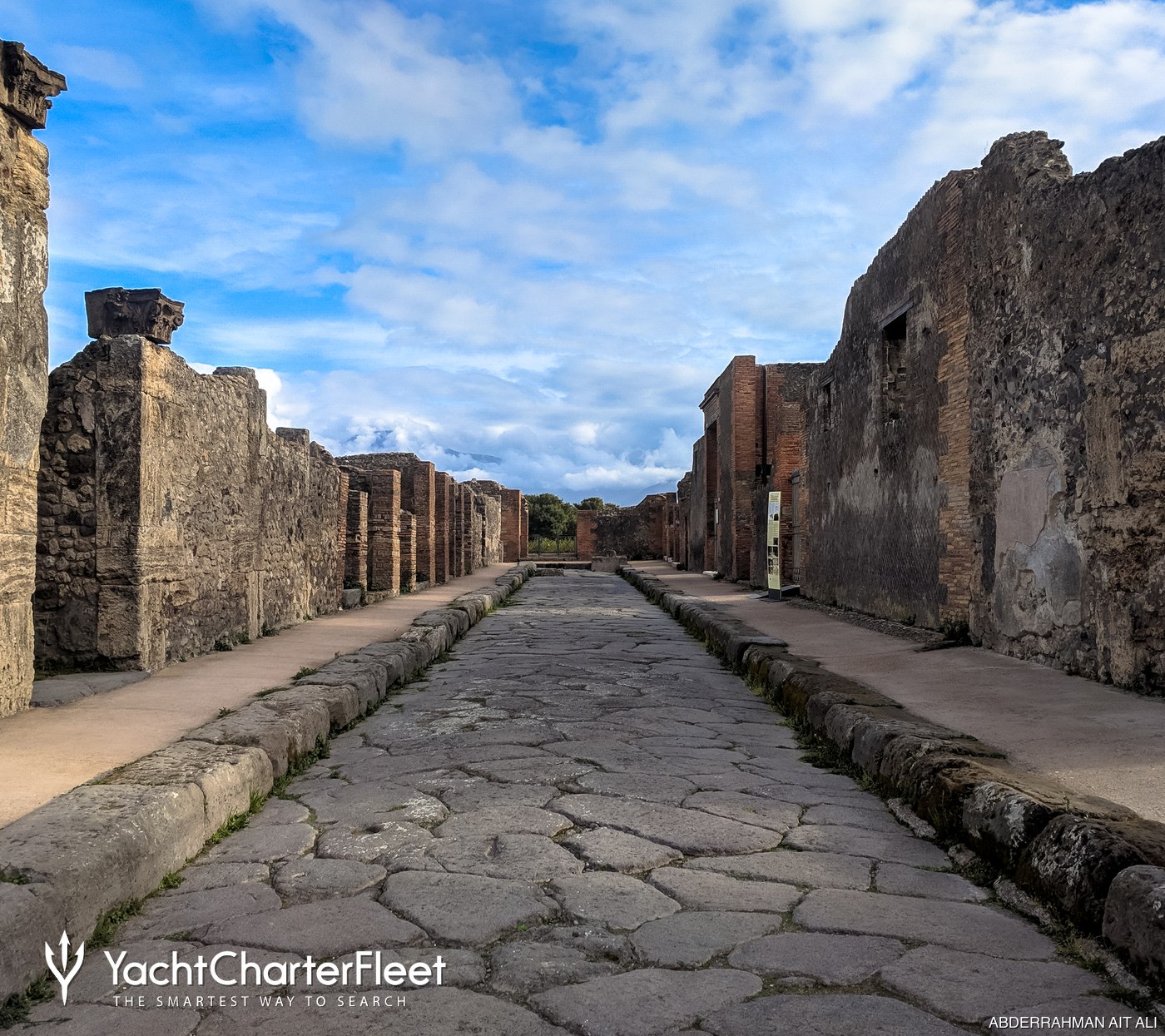
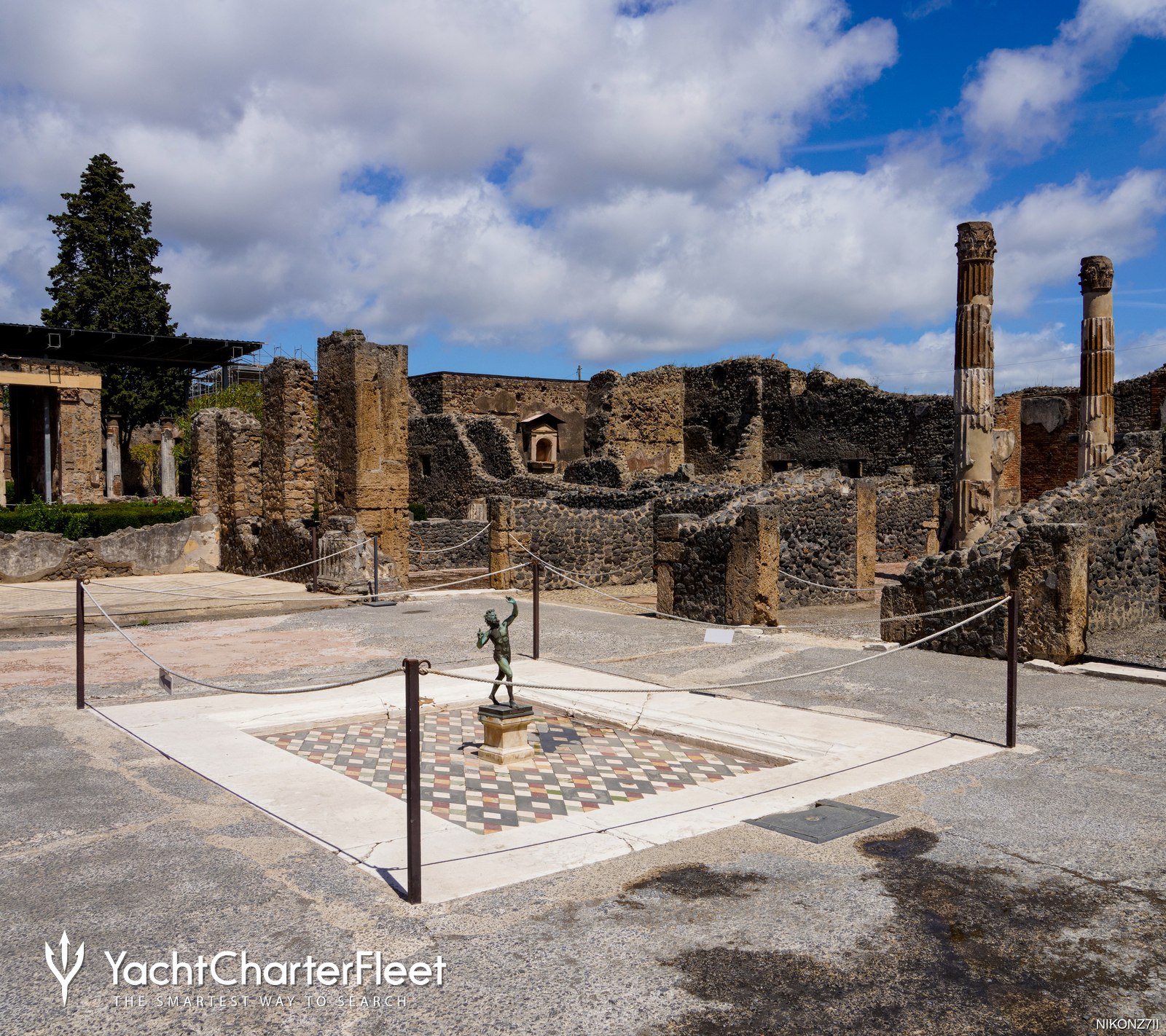
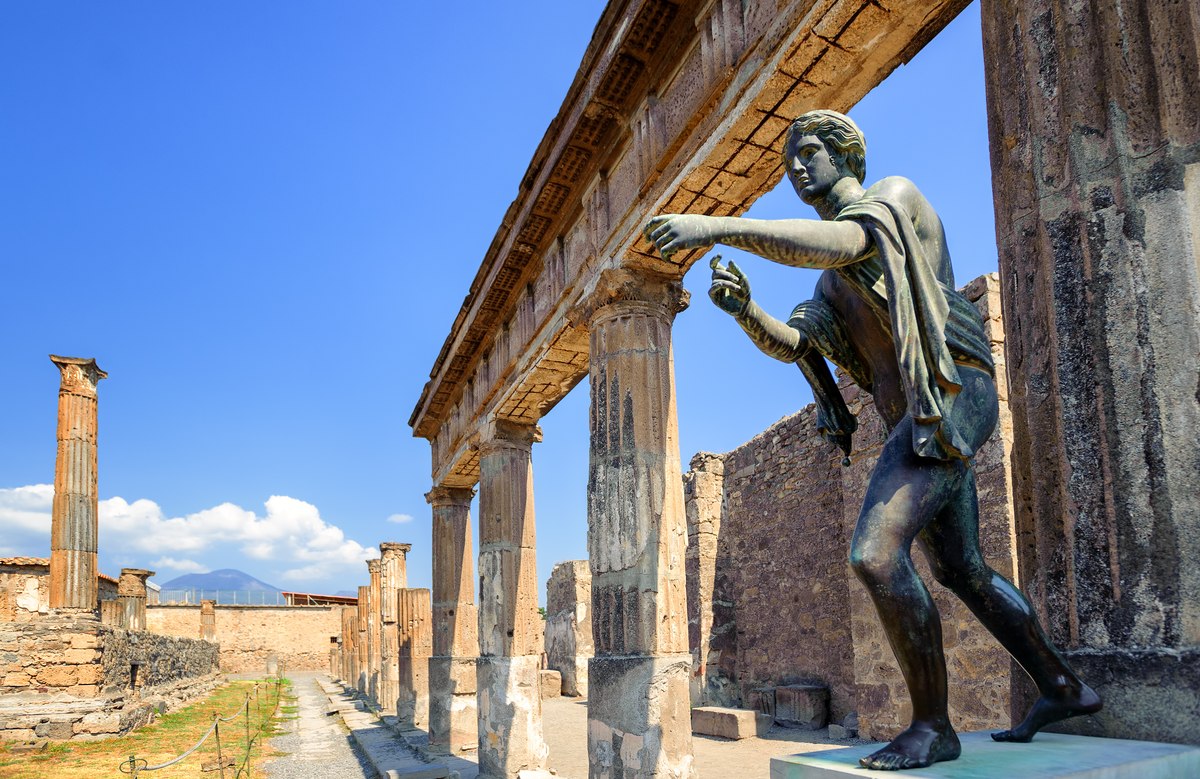
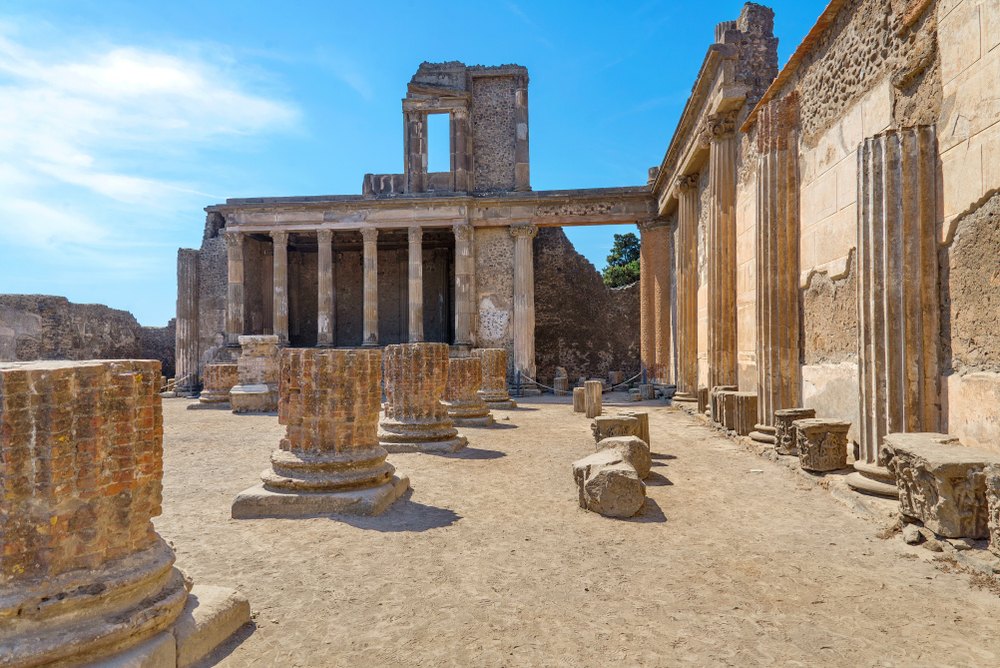
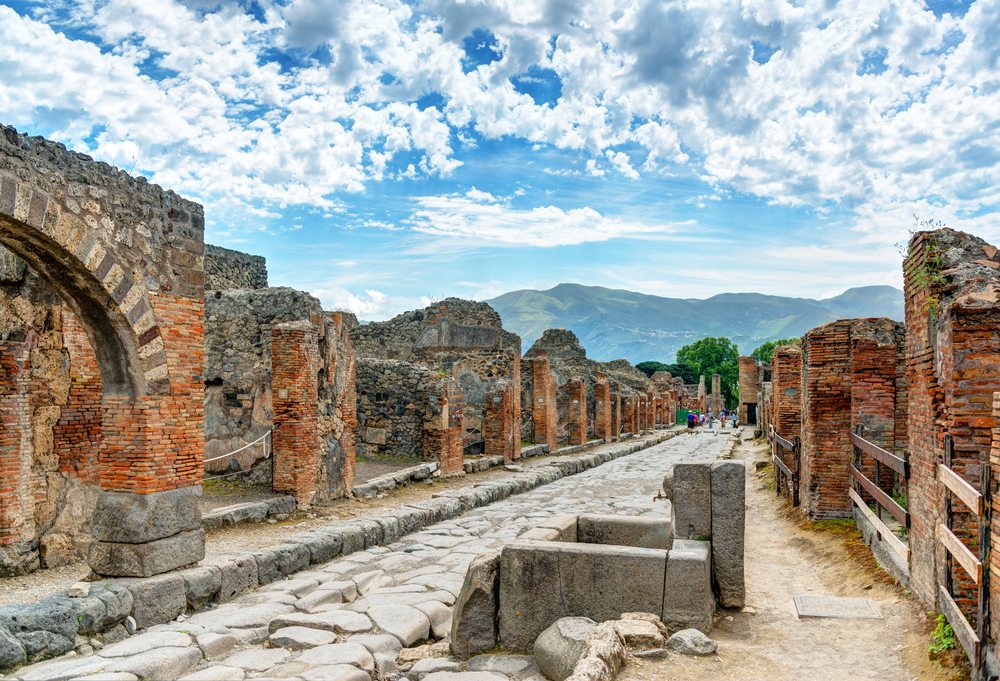
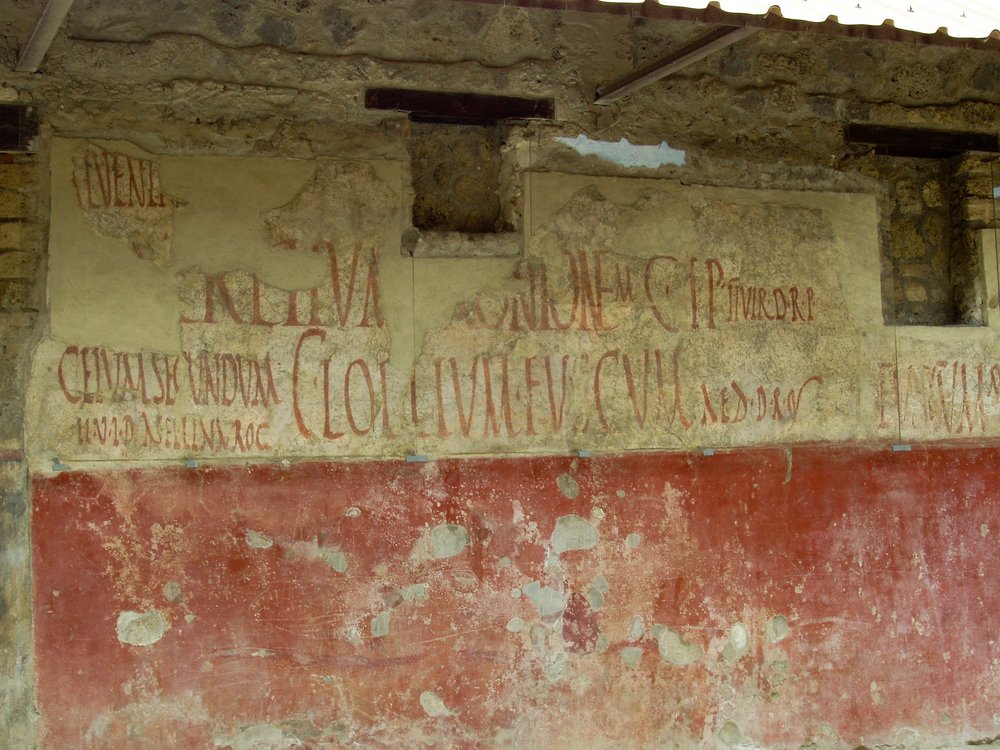
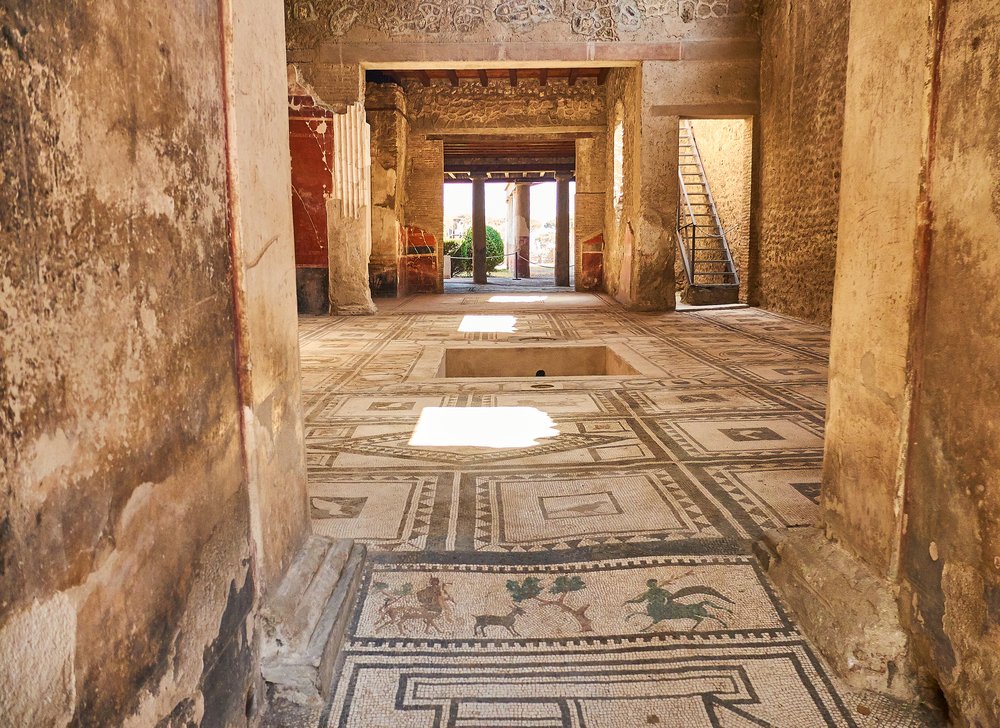
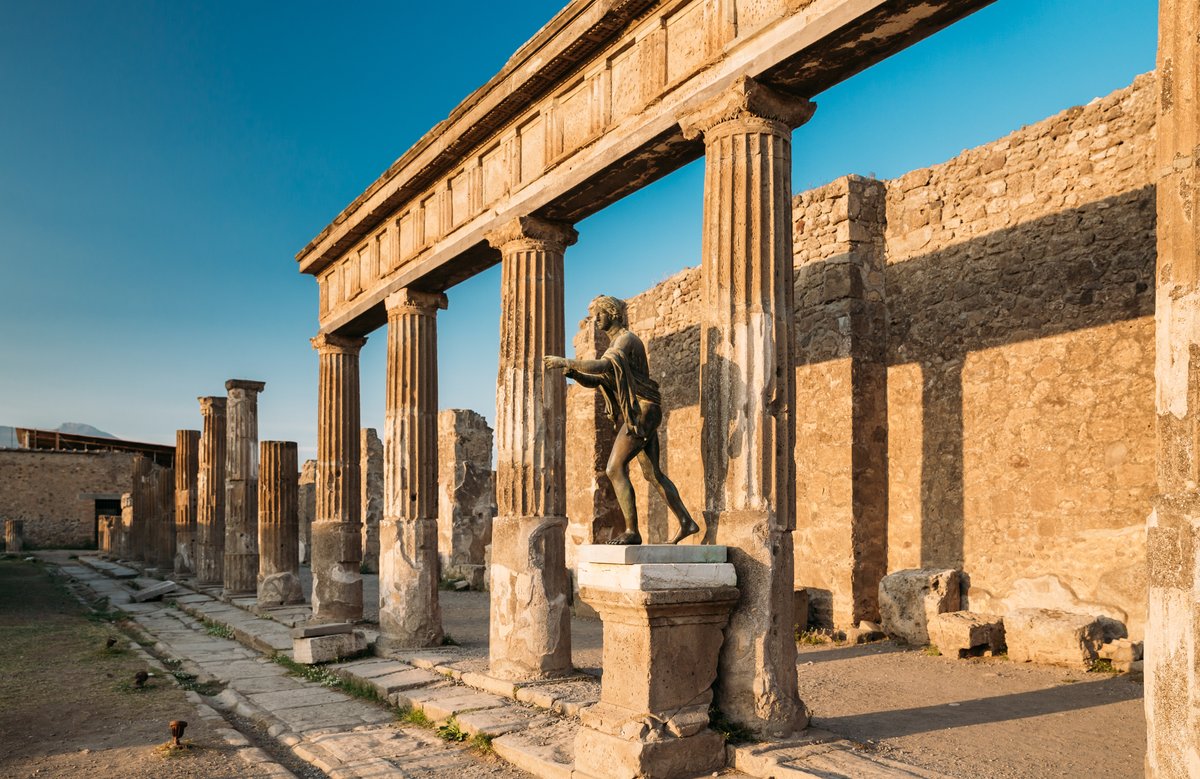
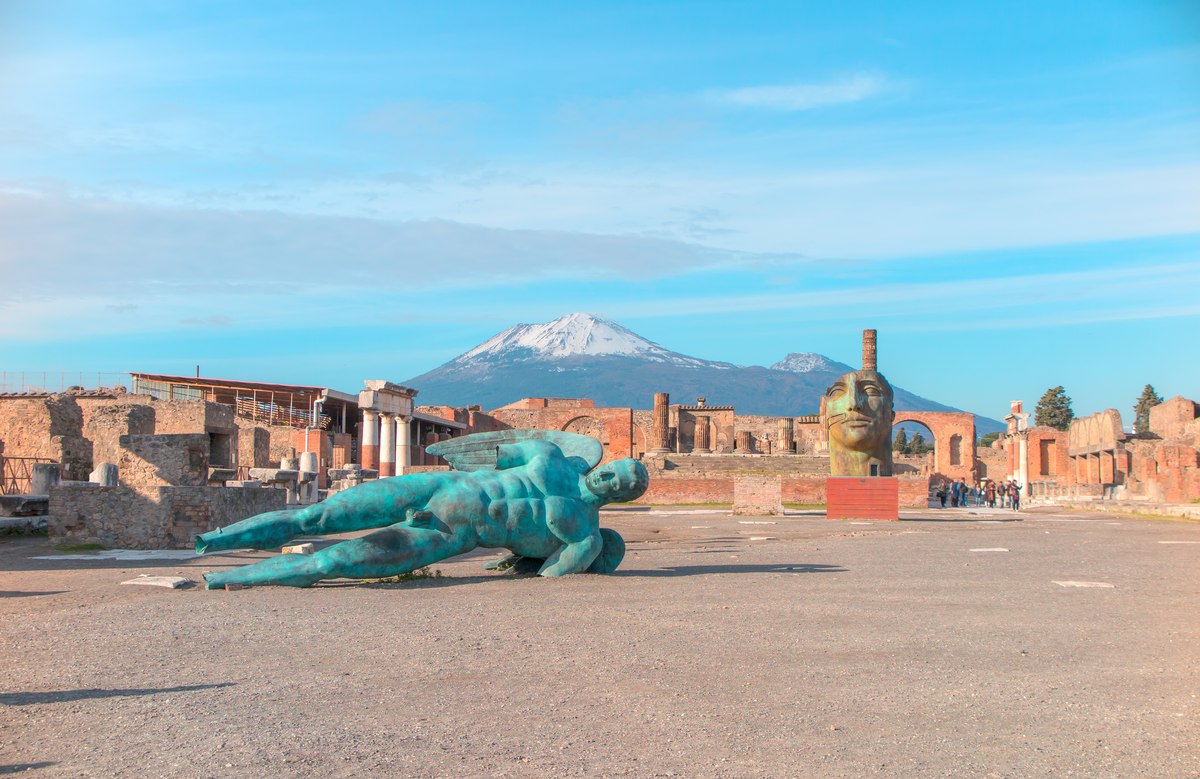
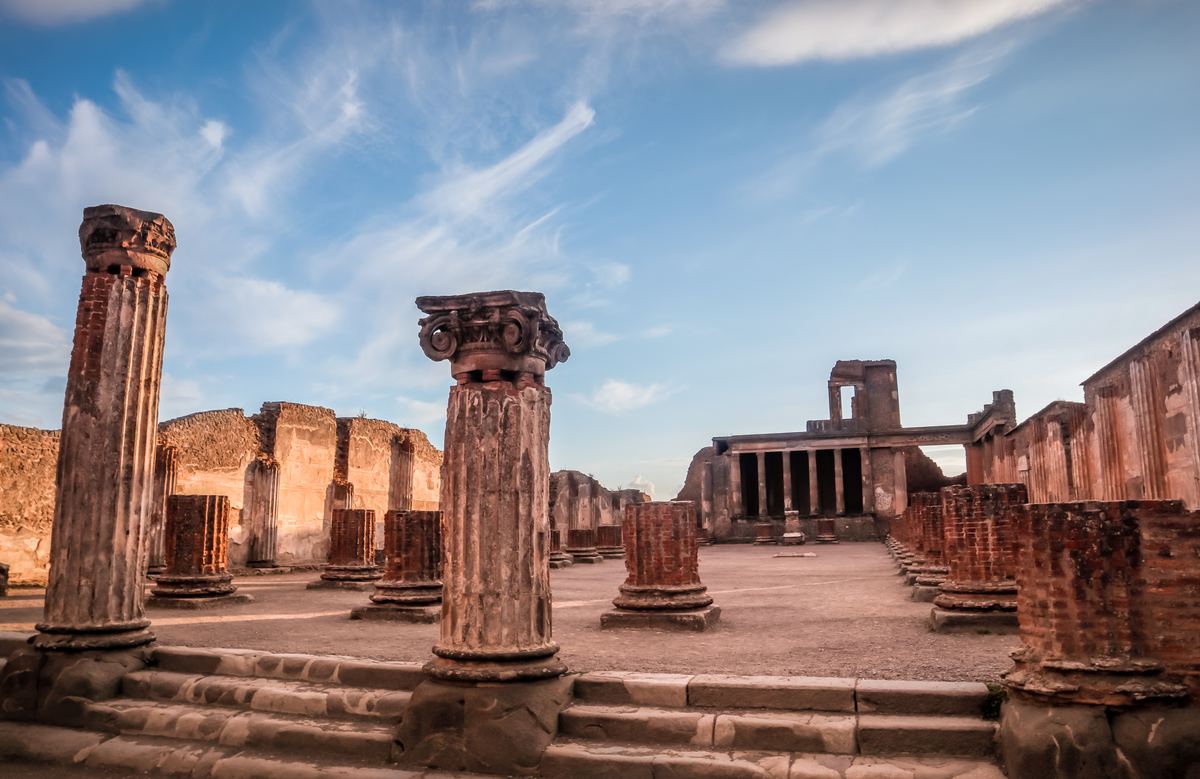
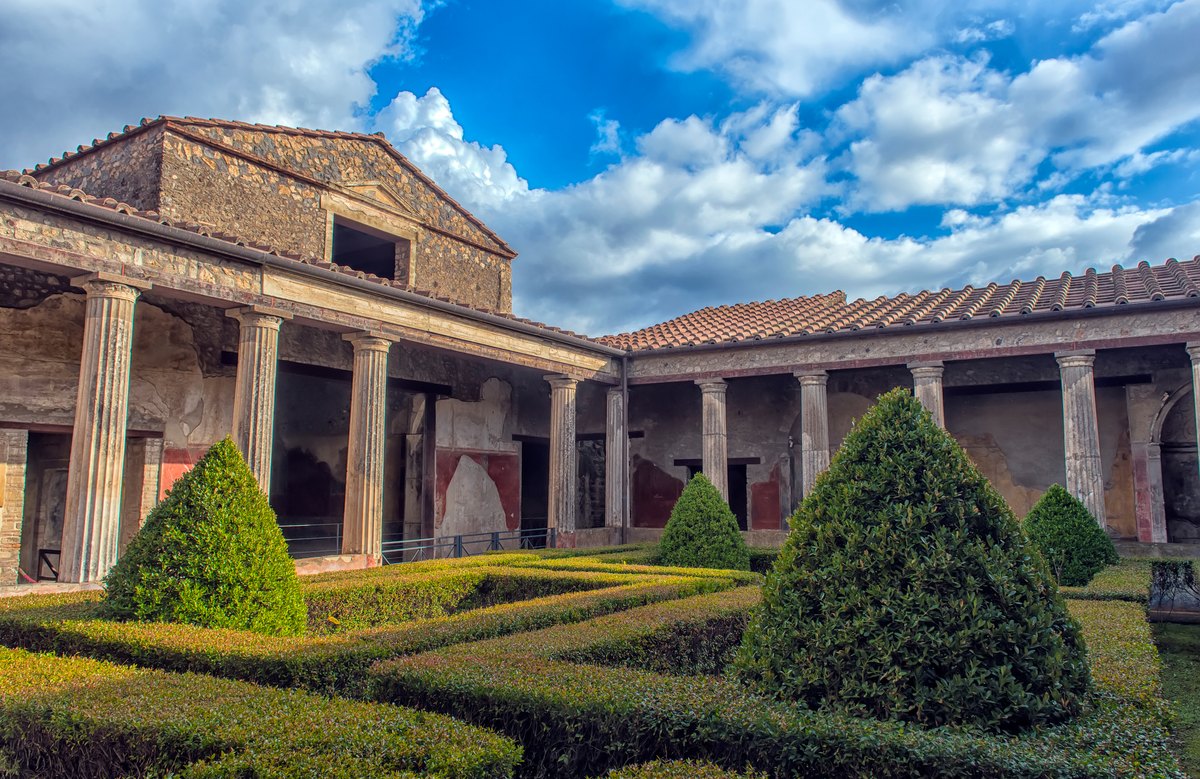
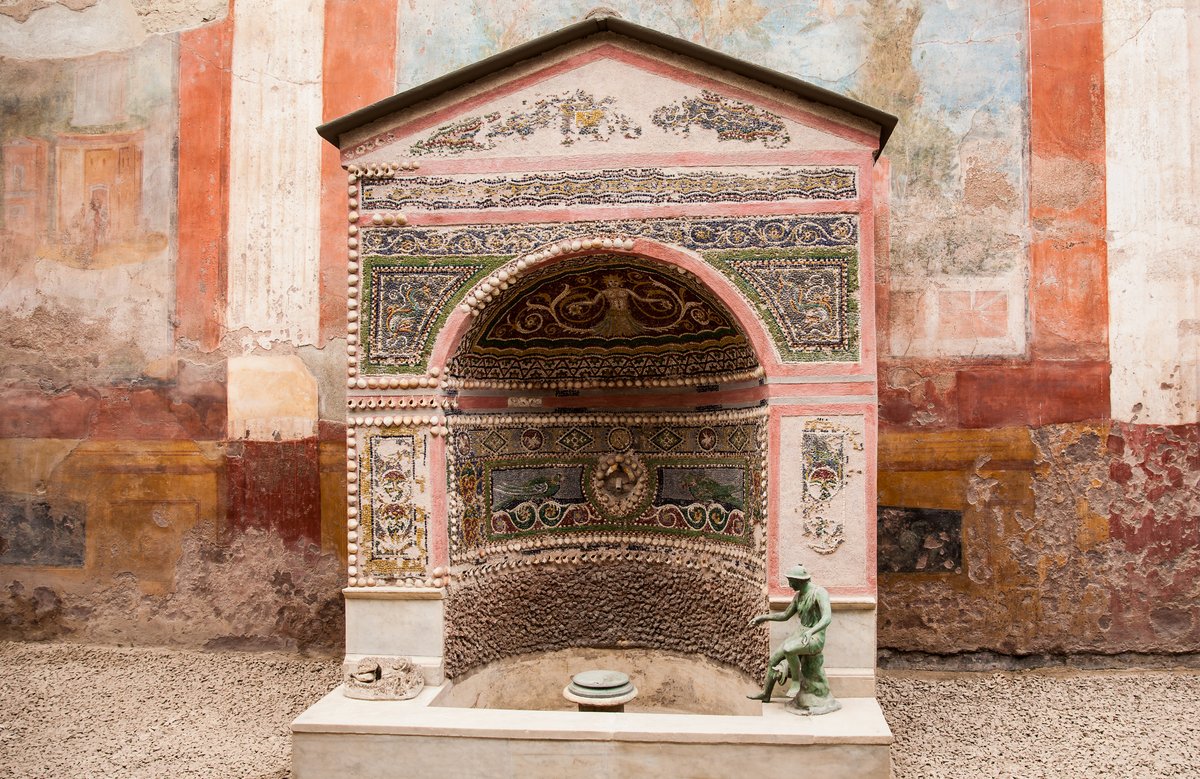
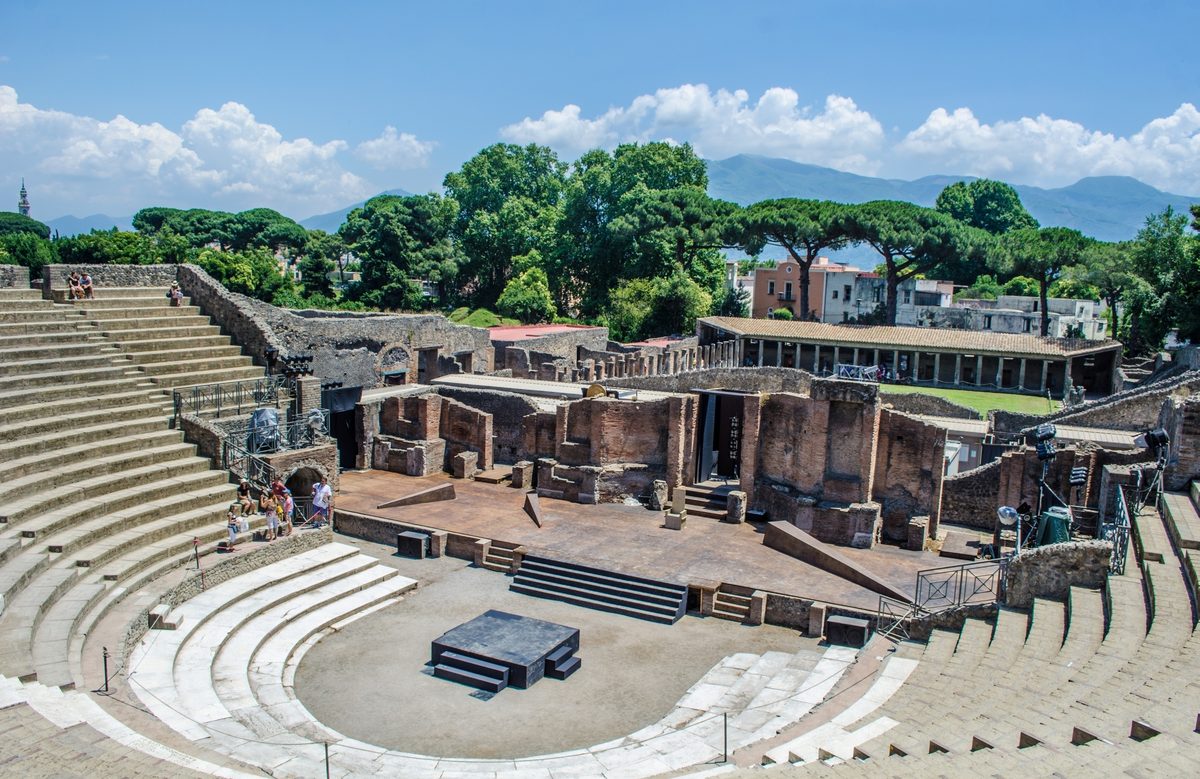
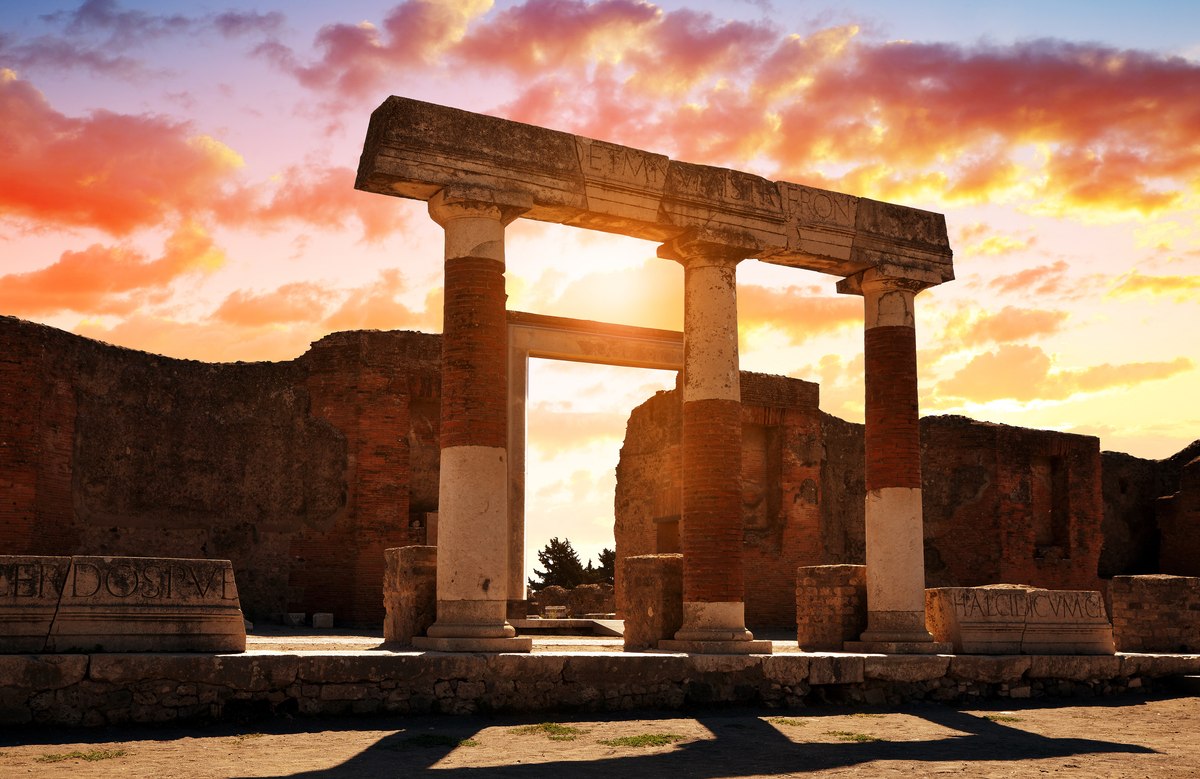
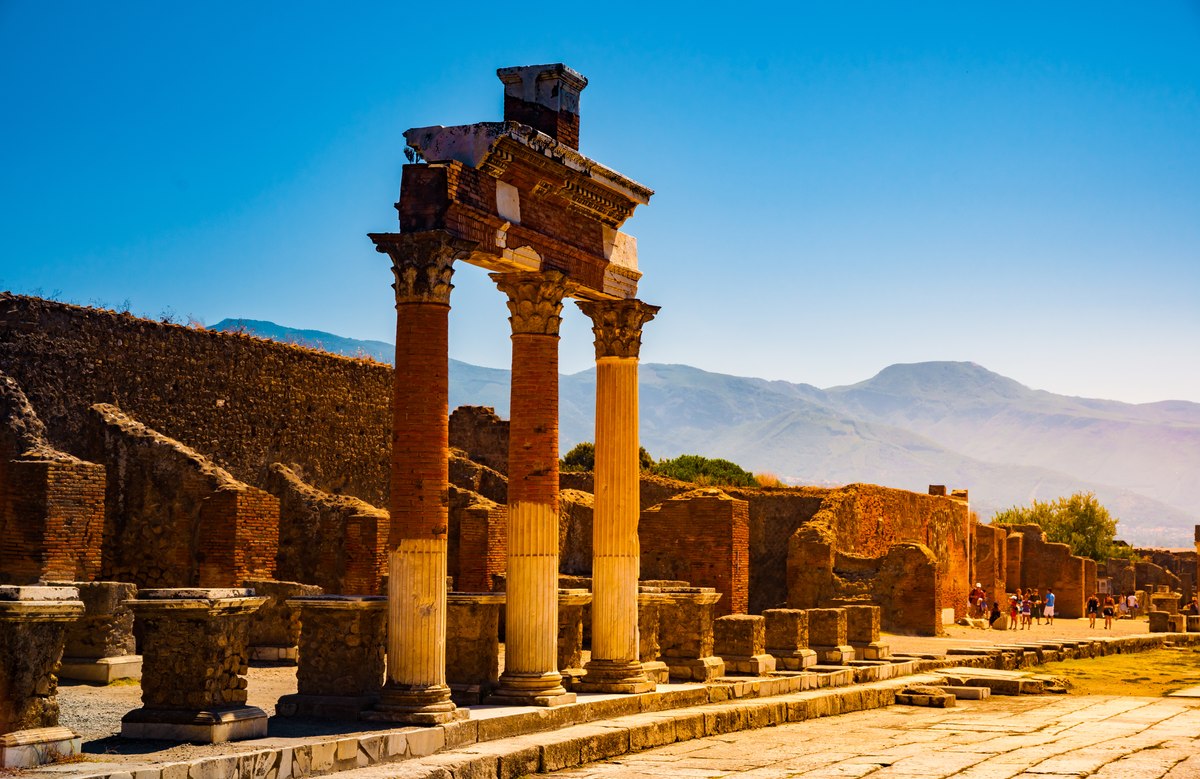
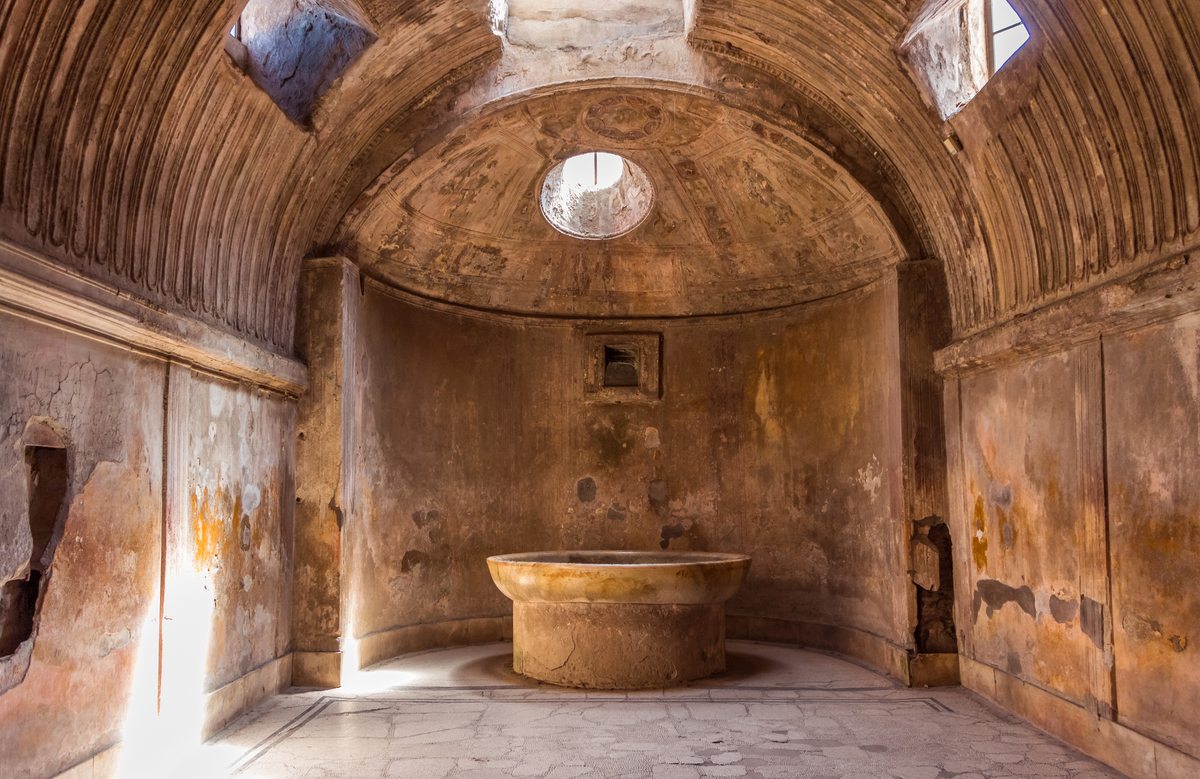
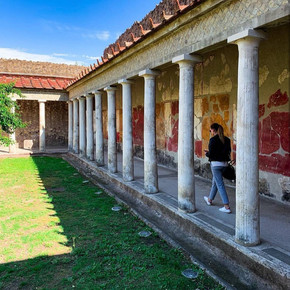
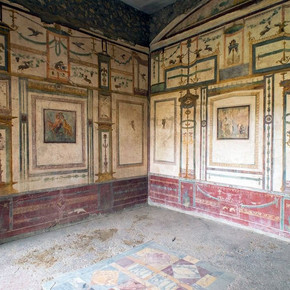
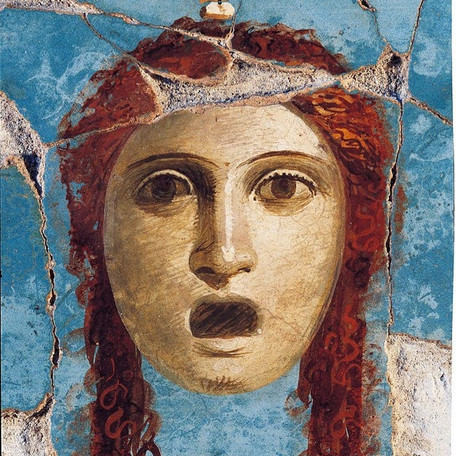
Walking through the ancient stone gates of Pompeii leads onto broad basalt-paved streets marked by deep chariot ruts and raised pedestrian crossing stones. The central Forum anchors the public sector, flanked by the remnants of the Basilica, municipal offices, and temples dedicated to Jupiter and Apollo. Beyond the civic spaces, preserved residential buildings range from modest artisan workshops and fast-food thermopolia to expansive aristocratic estates like the House of the Faun. Intact mosaic floors and vibrant wall frescoes showcase mythological scenes and domestic life for visitors touring Campania on an Italy yacht charter.
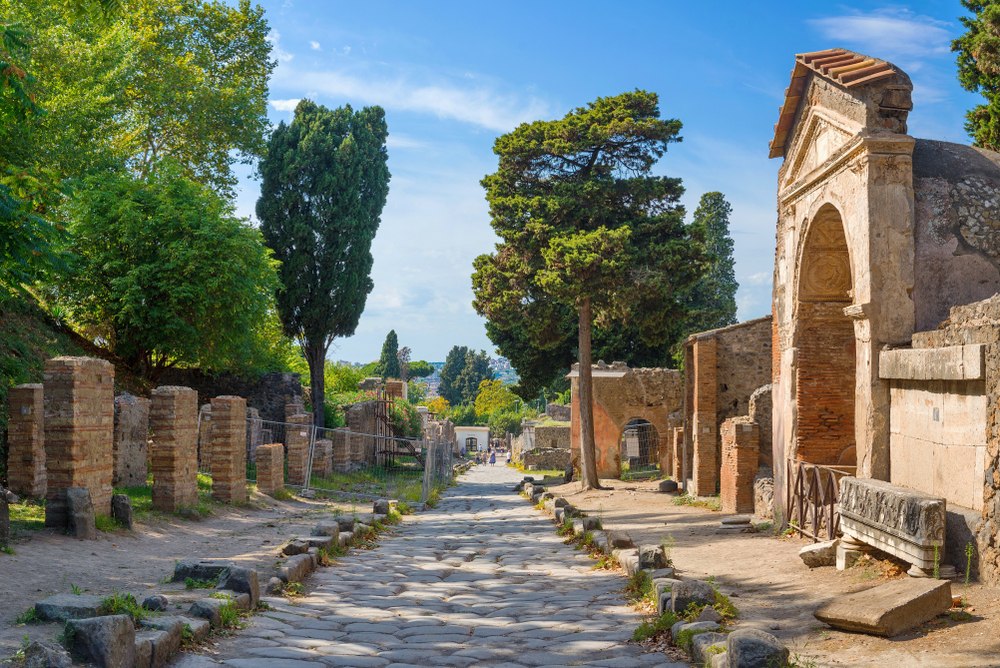
On the outer edge of the residential quarters, the grand Amphitheater holds historical significance as the oldest surviving stone stadium from the Roman world, built around 70 BC to seat 20,000 spectators. Nearby, the Villa of the Mysteries contains famous continuous frescoes depicting secret Dionysian initiation rites along its dining room walls. Tenders and shore transports operate frequently from neighboring Stabiae or Marina di Stabia, where charter yachts lie at berth within easy reach of these ancient suburban villas.
Inspiration for Amalfi Coast yacht charters
-
 The top 15 Instagrammable places on the Amalfi Coast Add these Instagrammable spots to your Amalfi Coast yacht rental itinerary right now; these are the best places to take ...
 -
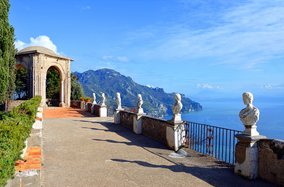 5 reasons to visit Ravello on your Amalfi Coast yacht charter If you are planning an Amalfi coast yacht charter, be sure to add the hillside town of Ravello to your itinerary. With i ...
 -
 The allure of the Amalfi Coast: 8 reasons to visit on a private yacht charter An Amalfi Coast yacht charter is replete with dramatic scenery, world-class restaurants and authentic Italian culture an ...
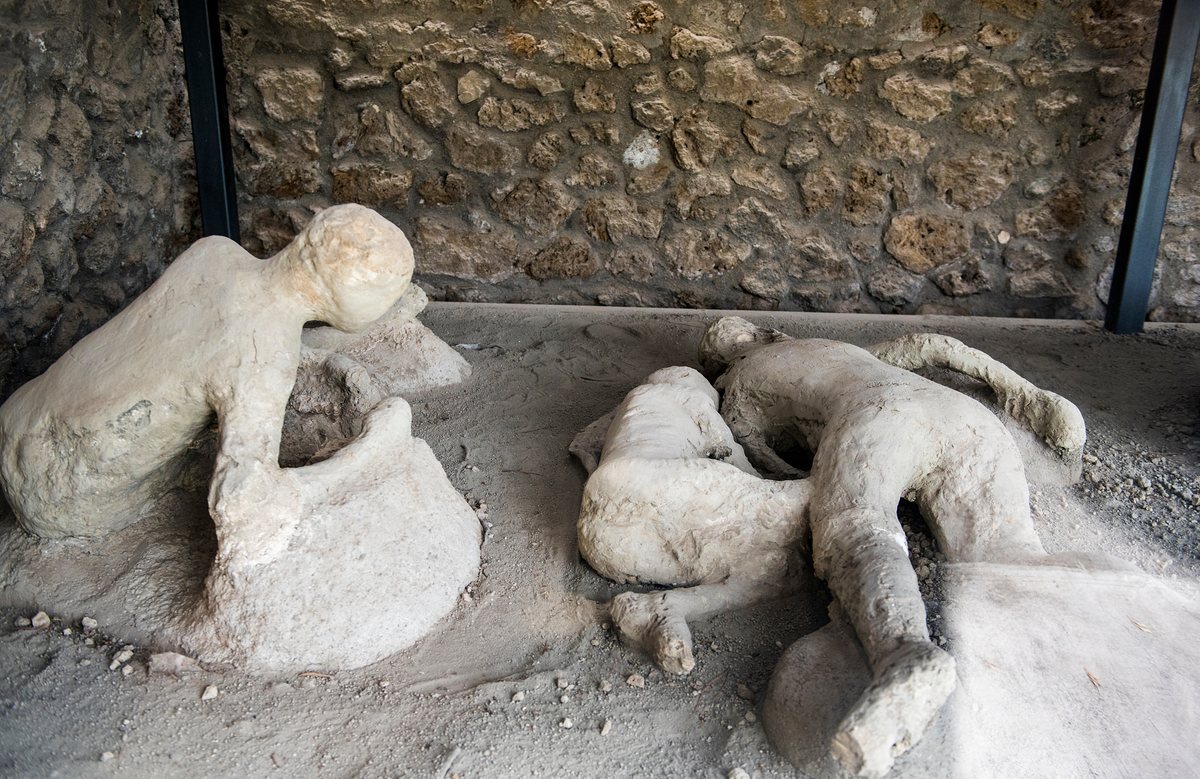
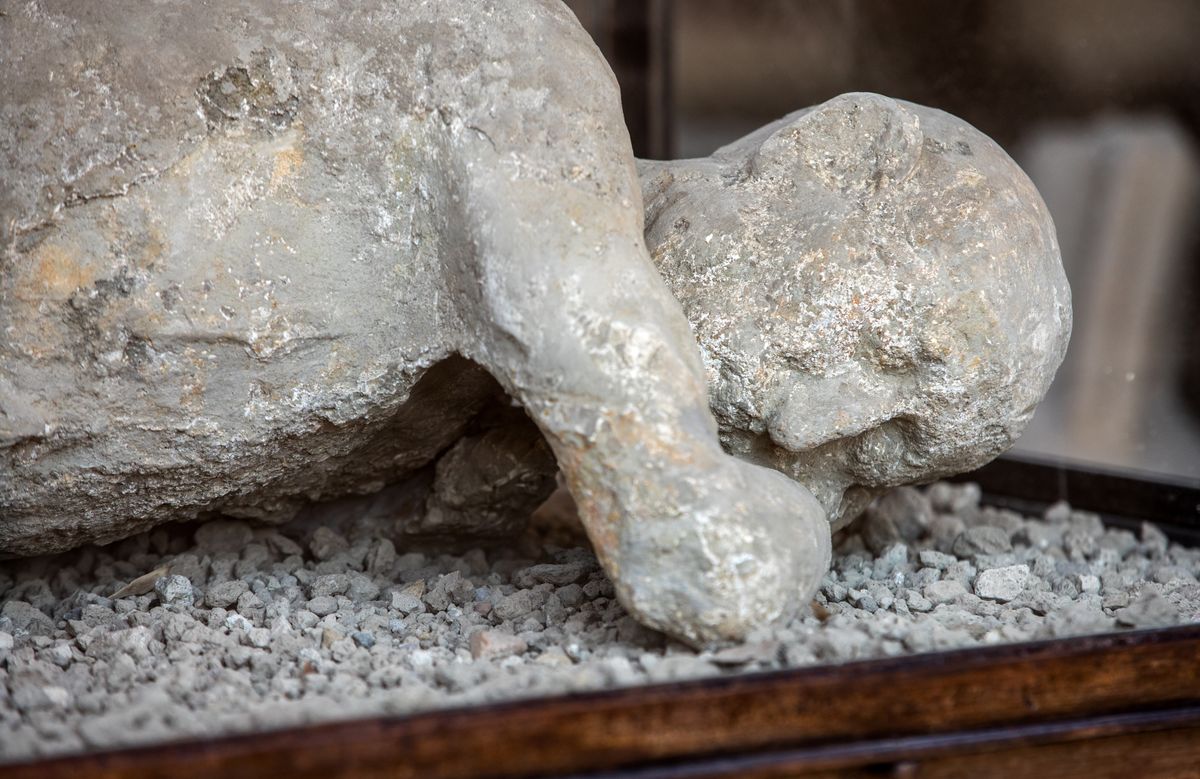
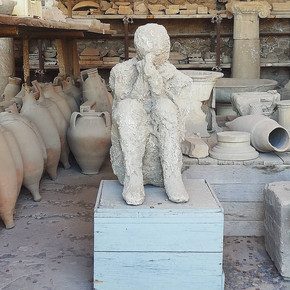
Ongoing archaeological work continues to unearth new sections of Pompeii, bringing fresh details of ancient life to light each year. Excavators use plaster techniques pioneered in the 19th century to fill voids left by decomposed organic matter in the hardened ash, creating precise casts of victims, household furniture, and tree roots.
The resulting plaster figures convey the final moments of the city's inhabitants with stark human reality. Such preserved Roman roads and grand public structures set Pompeii apart from other historic destinations along a Mediterranean yacht charter route.
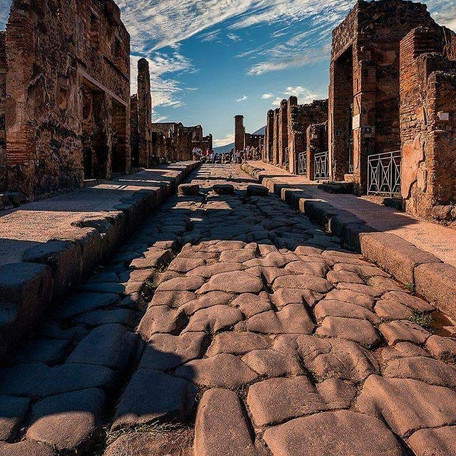

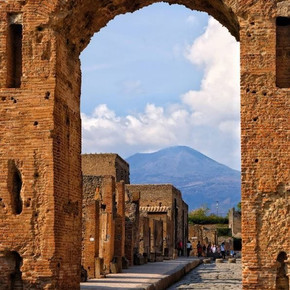
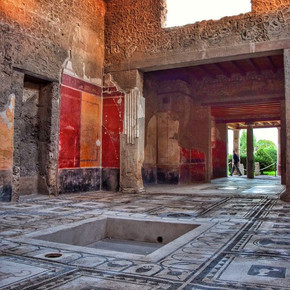


A coastal drive from Sorrento or the port of Castellammare di Stabia leads straight to the park gates, linking the cliffside villages on an Amalfi Coast yacht charter route with inland Roman history. Spending four to five hours at the site allows adequate time to walk the main thoroughfares, visit key private villas, and tour the on-site museum displaying bronze tools, carbonized loaves of bread, and household glass. Morning visits avoid the strongest mid-day heat, particularly when walking across unshaded stone plazas.
Navigating summer traffic around the Bay of Naples and securing private access to the ruins require thoughtful advance planning. Professional local management ensures efficient harbor logistics, verified berth reservations, and smooth transit between the coast and the ruins of Pompeii.
Coordinating private driver transfers from Marina di Stabia, arranging skip-the-line archaeologist guides, and booking berths along the coast are best handled by an experienced yacht charter broker.
Ready to see Pompeii in person?