Naples is known for its lively streets, historic landmarks, and layered culture. Beneath the surface, another side of the city unfolds through tunnels and passages that reveal how Naples adapted to periods of uncertainty and change.
Galleria Borbonica offers a detailed look into this underground world. Running below the historic center, the tunnel system traces centuries of use and reuse, shaped by political decisions, conflict, and daily life.
The tunnel was commissioned in the mid-nineteenth century by Ferdinand II of Bourbon. It was designed as a discreet escape route linking the Royal Palace with nearby military areas, intended to protect the royal family during unrest.
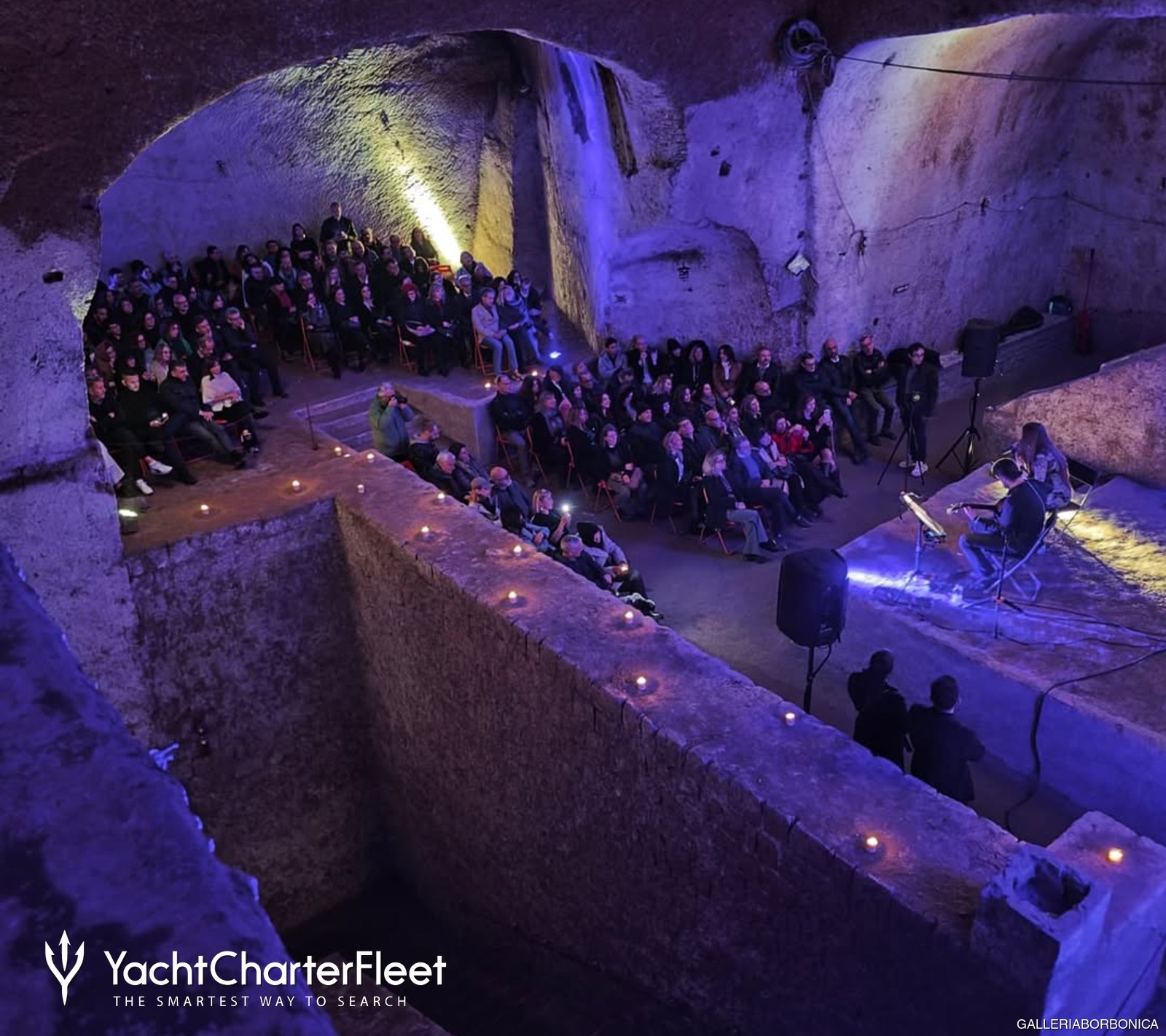
Although the original plan was never completed, large sections of the tunnel survived. Rediscovered many years later, these spaces now allow visitors exploring the charter routes in Italy to move through areas once hidden from public view. Many people include this site while spending time ashore during a Naples yacht charter, as it reveals a side of the city not seen from the waterfront.
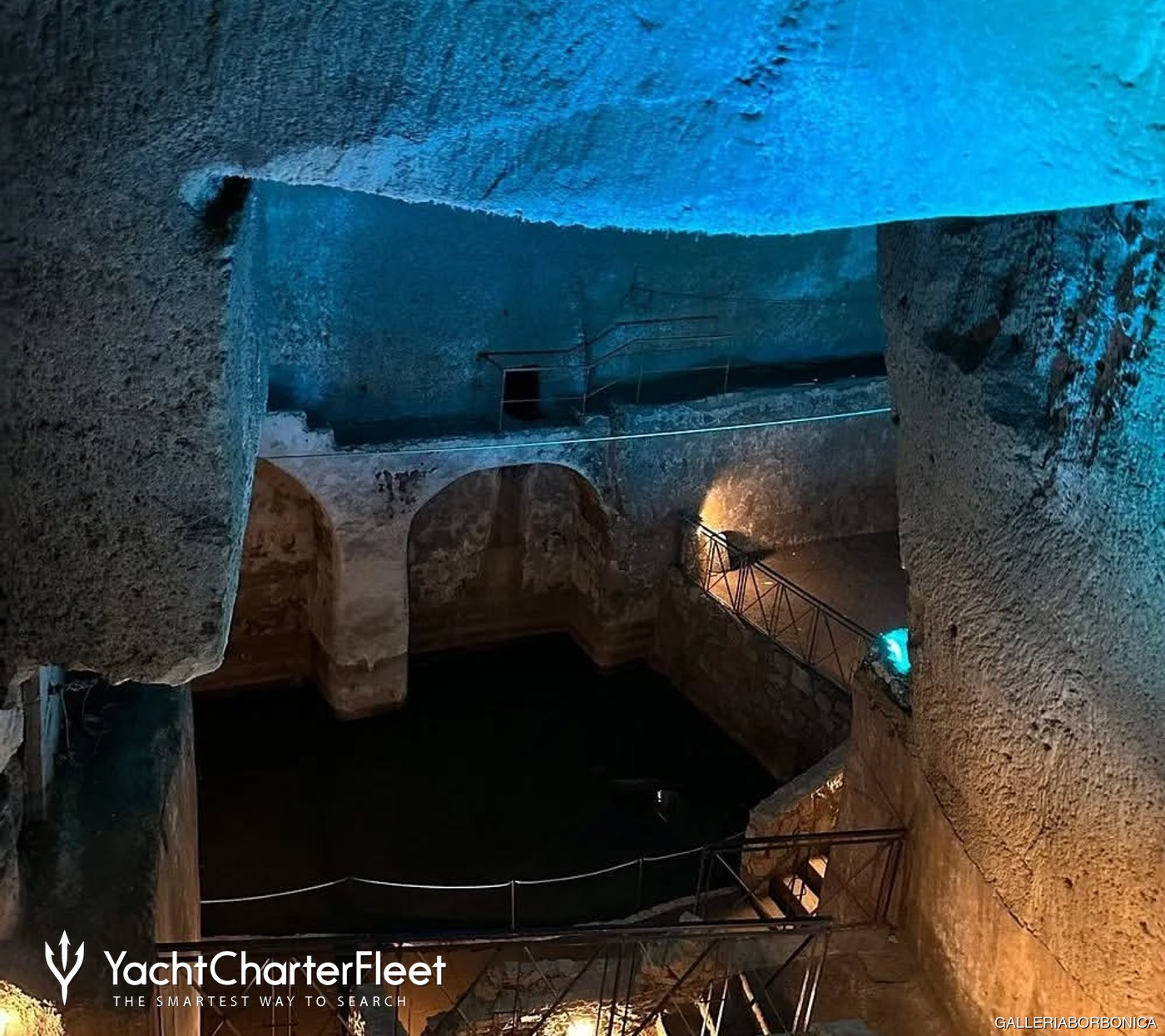
During World War II, the tunnels became air raid shelters for civilians. Thousands of residents sought safety here during bombing raids, turning the underground passages into temporary living spaces.
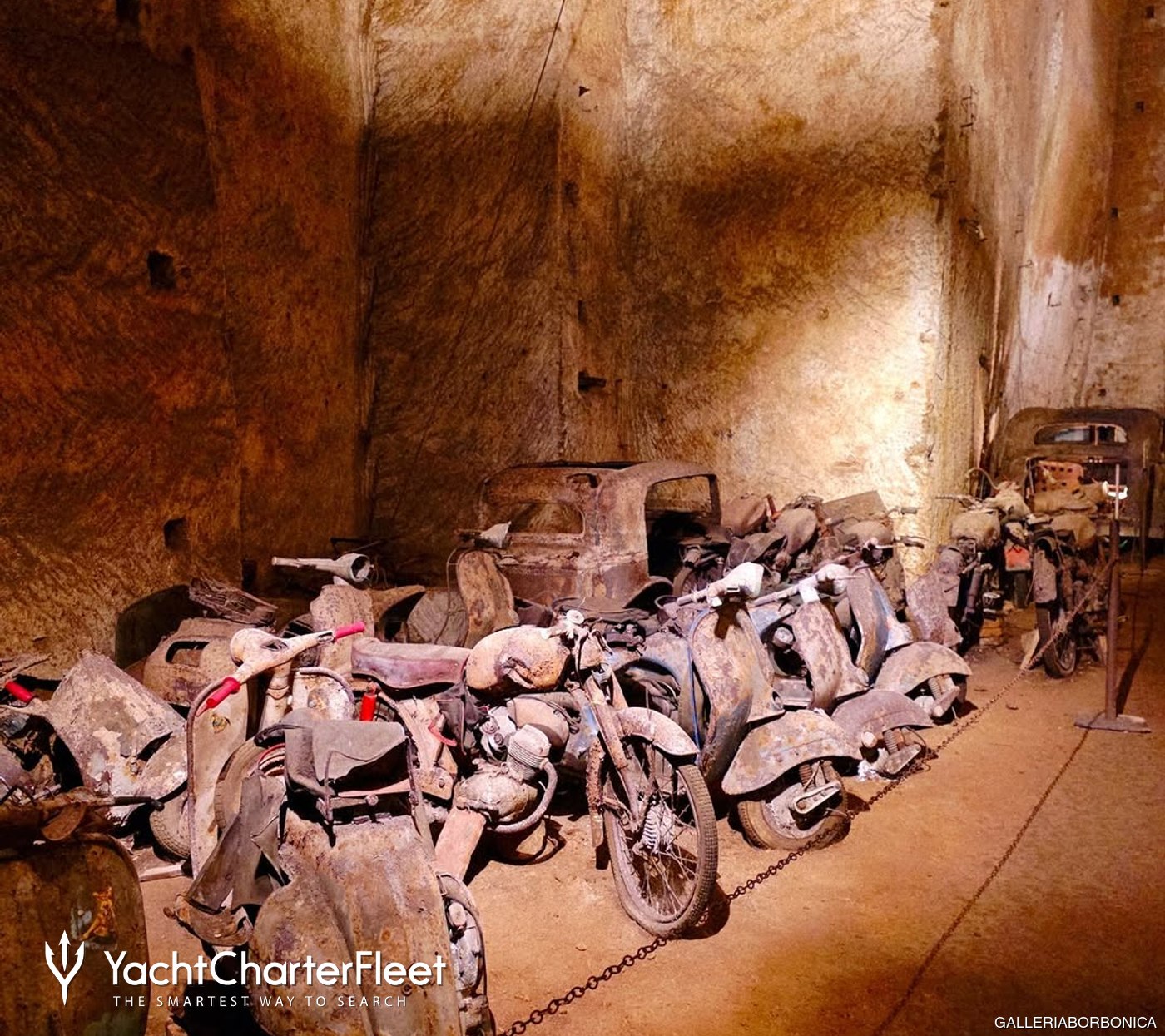
Today, visitors can still see objects left behind, including furniture, personal belongings, and old vehicles. These items offer a quiet record of daily life below ground, where families waited for danger to pass. The experience provides a contrast to the open views often associated with a yacht charter along the coast.
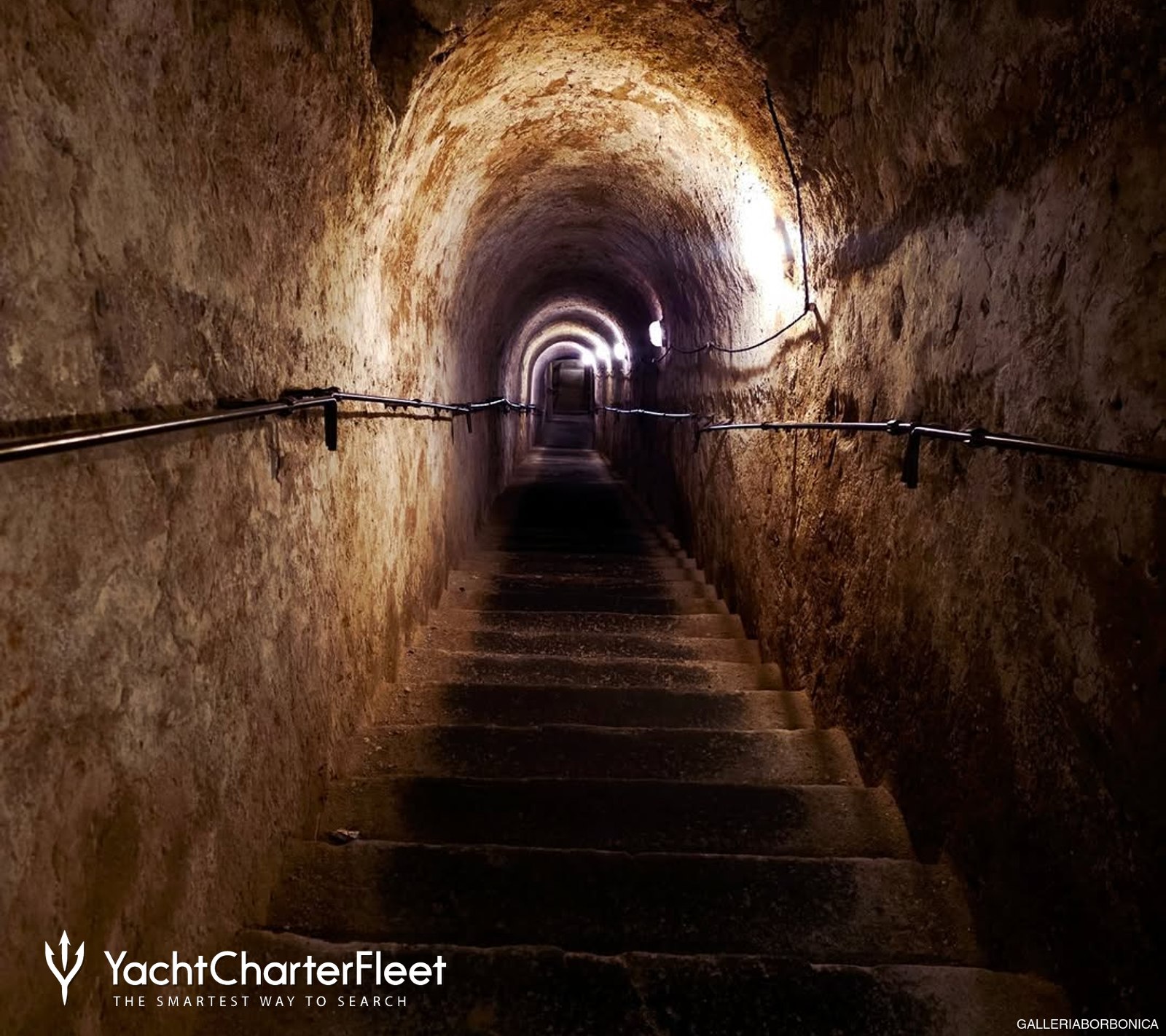
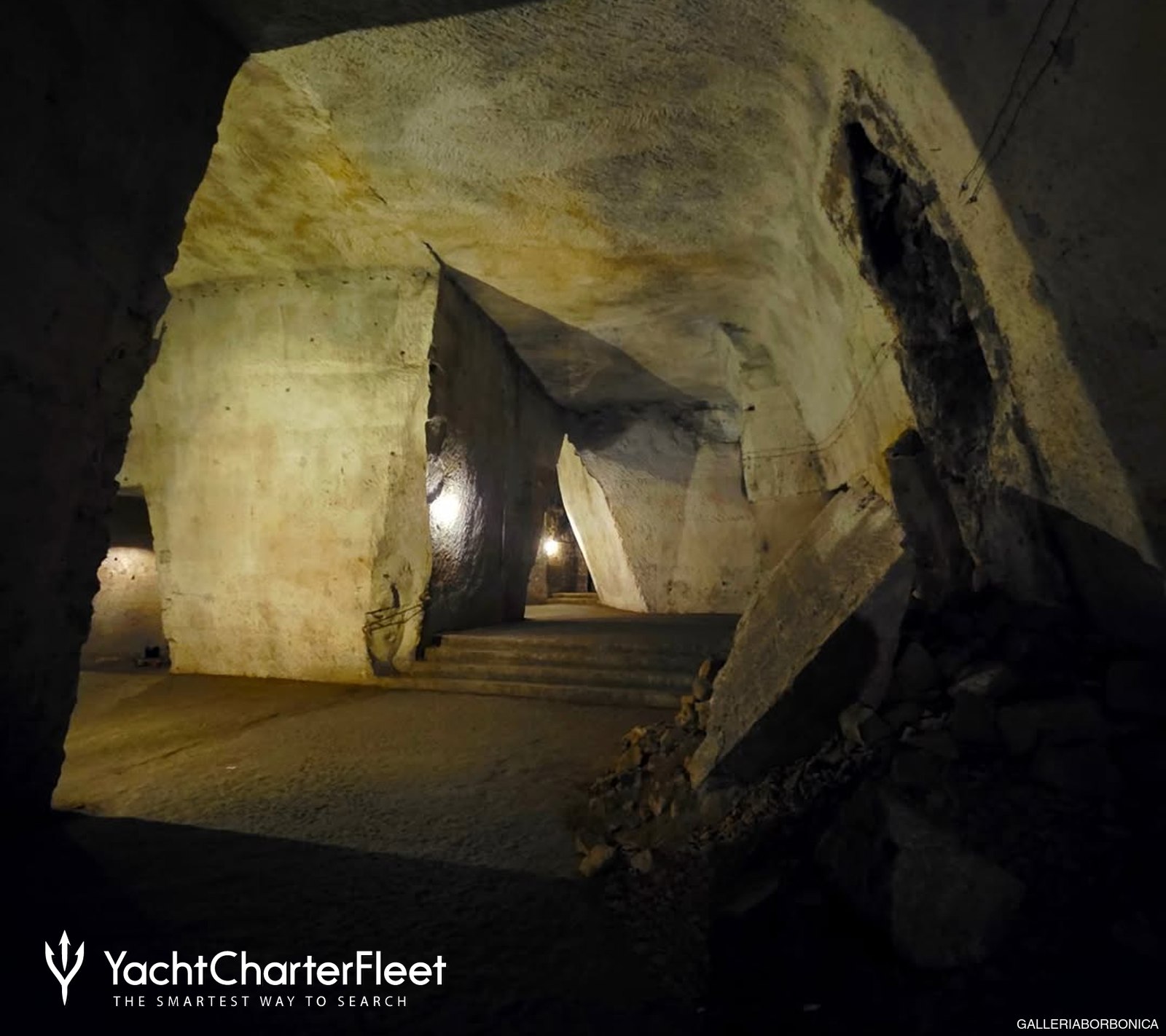
The tunnel network reflects careful engineering. Excavated through volcanic rock, the passages include vaulted ceilings, staircases, and chambers designed to remain stable over time.
Some areas connect to ancient Roman aqueducts, showing how newer construction reused earlier infrastructure. This layered approach highlights how the city built upon its past rather than replacing it entirely.
Several guided routes are available, each focusing on a different aspect of the tunnel system. Some tours explore wartime use, while others concentrate on construction methods and materials.
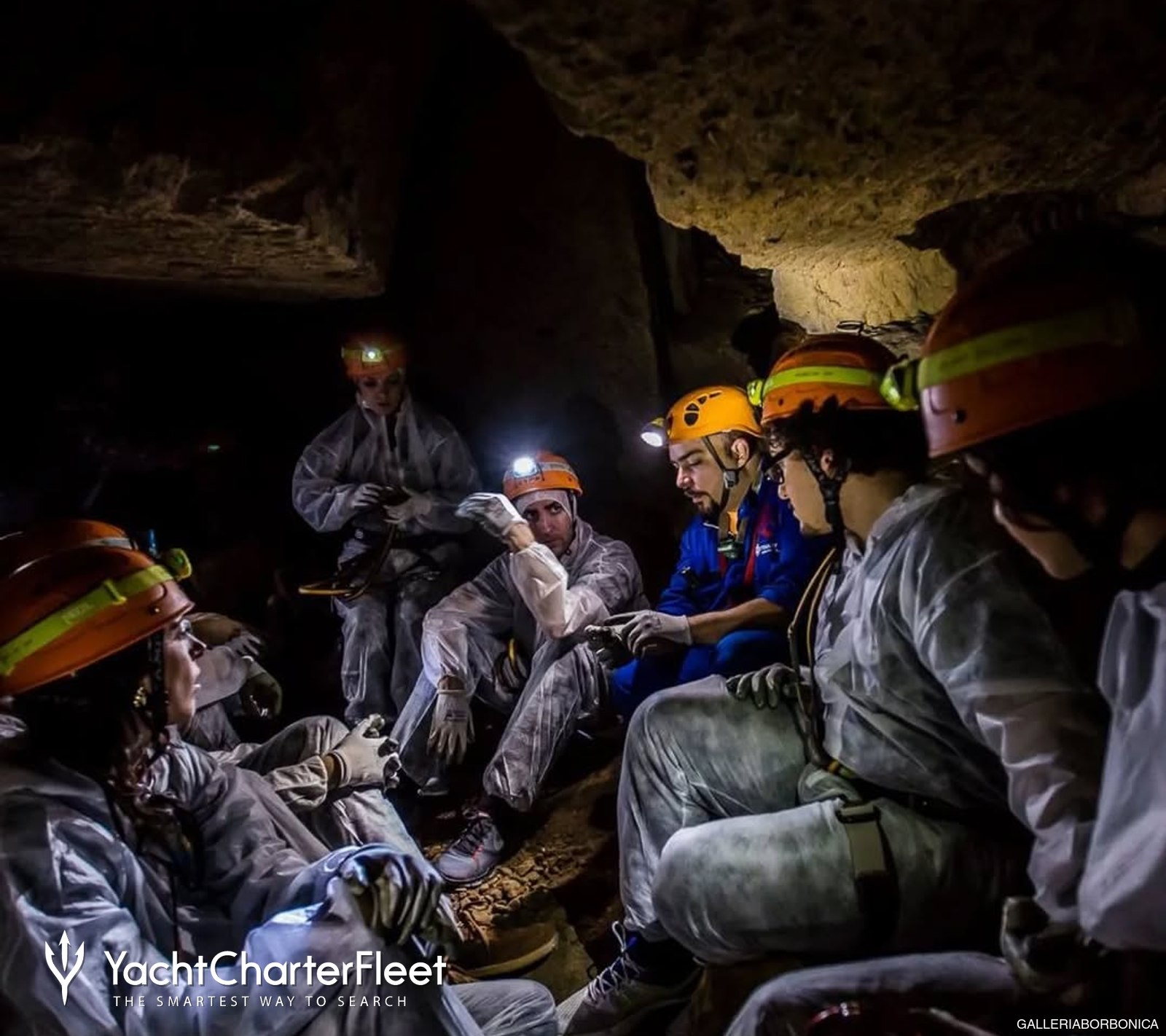
More active routes lead through narrower sections and require basic equipment. These tours offer a closer look at areas rarely accessed and appeal to charter guests interested in the physical structure of the tunnels.
Galleria Borbonica stands apart from traditional attractions by offering a quiet, reflective environment. While the city above remains active, the tunnels encourage a slower pace and closer attention to detail.
This underground perspective adds depth to any visit, especially for those balancing inland exploration with time at sea. It fits naturally within broader travel plans that may also include an Amalfi Coast yacht charter.
Naples serves as a useful base for exploring southern Italy, both on land and water. Including Galleria Borbonica during a Mediterranean yacht charter adds historical context before returning to coastal routes.
For smooth planning and timing, a yacht charter broker can help integrate this visit into a wider itinerary that balances city access with time on the water.
Galleria Borbonica
Parcheggio Morelli, Via Domenico Morelli, 61 c, 80121 Napoli NA, Italy