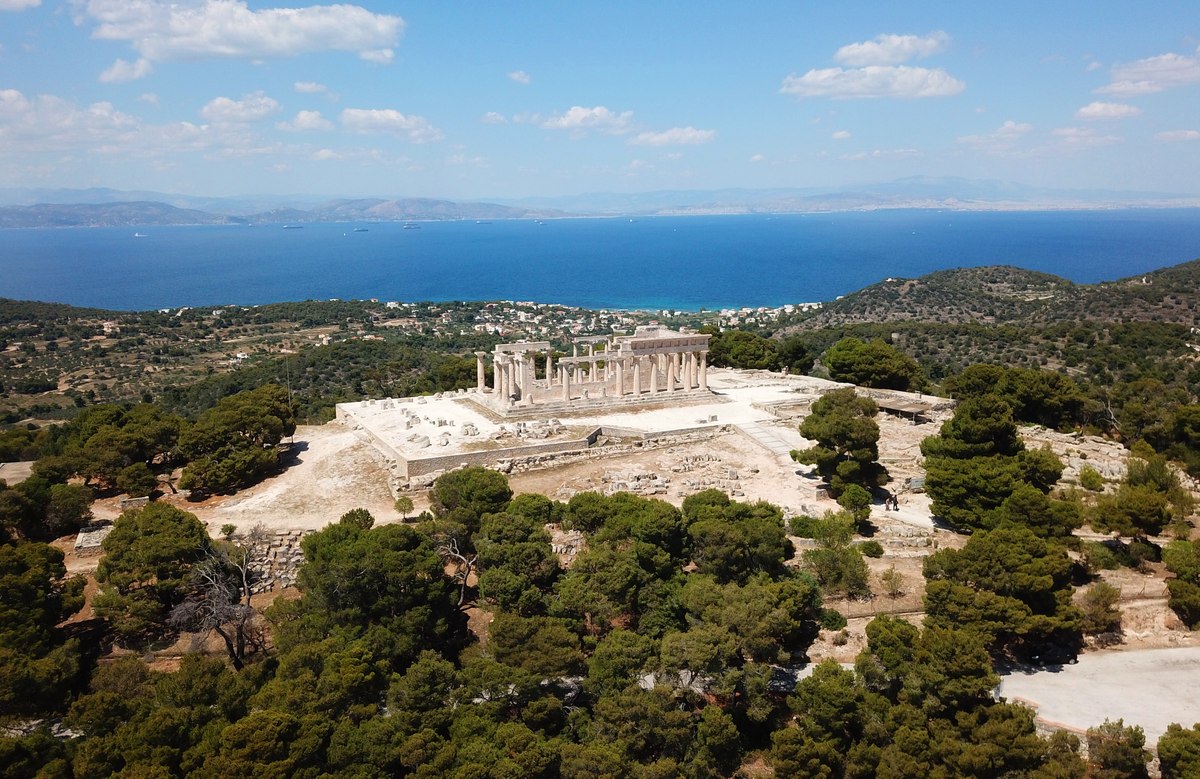
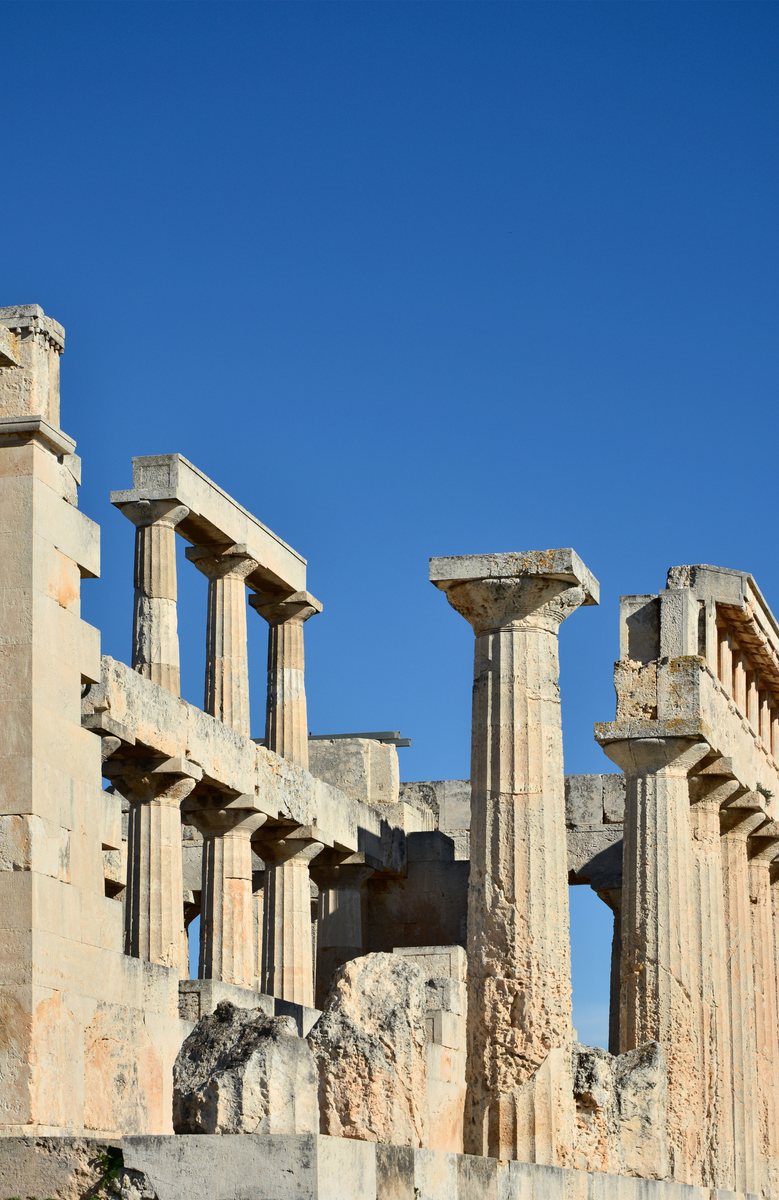
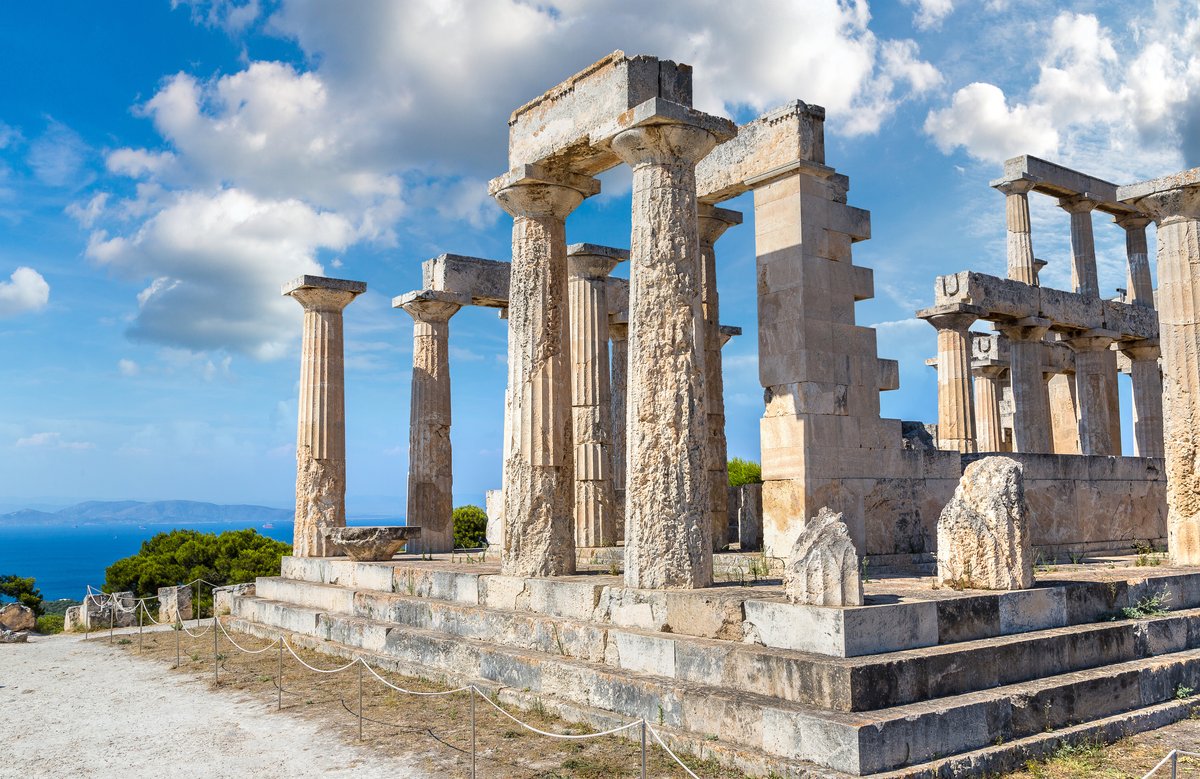
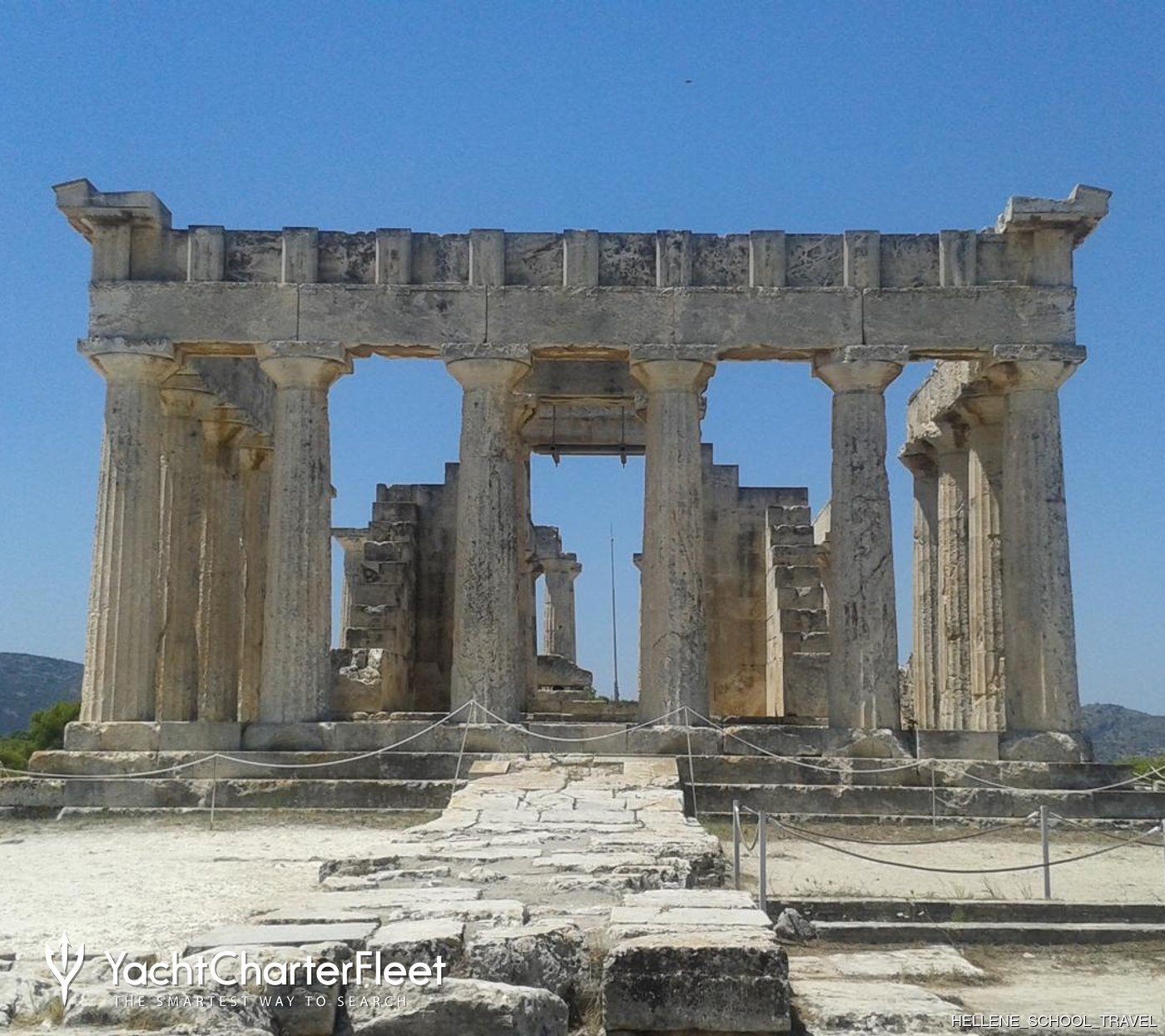
The Temple of Aphaia crowns a pine-forested ridge on the eastern side of Aegina, 160 meters above the Saronic Gulf. Built around 500 BC over the remains of earlier Bronze Age sanctuaries, the limestone site looks straight out across open waters toward the coastline of Attica. The elevated vantage point gives the remaining ruins a quiet sense of isolation despite their historical prominence.
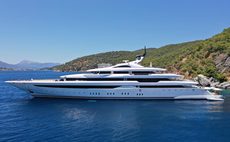
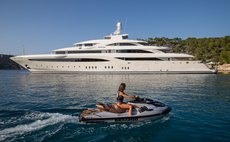
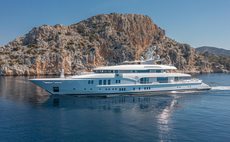
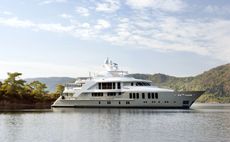
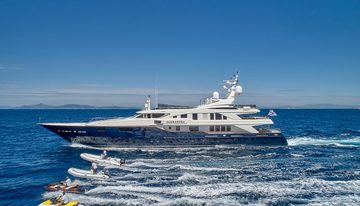
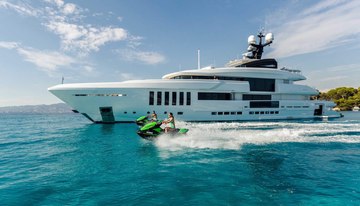
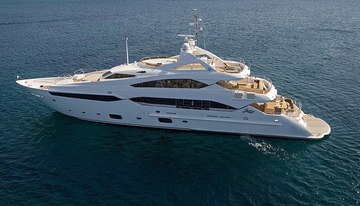
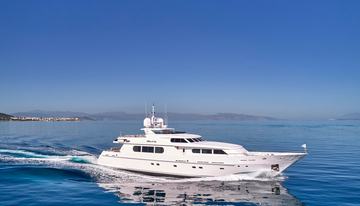
Agia Marina bay sits directly below the ridge, providing a convenient sheltered anchorage for a Saronic Islands yacht charter along Aegina's eastern shore. From the harbor dock, a short four-kilometer road winds uphill through dense pine woods straight to the sanctuary entrance.
Local tradition dedicated the sanctuary to Aphaia, an island deity whose origins link to the Cretan nymph Britomartis. Fleeing across the Aegean Sea to escape pursuit, she vanished into the pine groves of Aegina, prompting locals to build a sacred shrine to honor her protection.
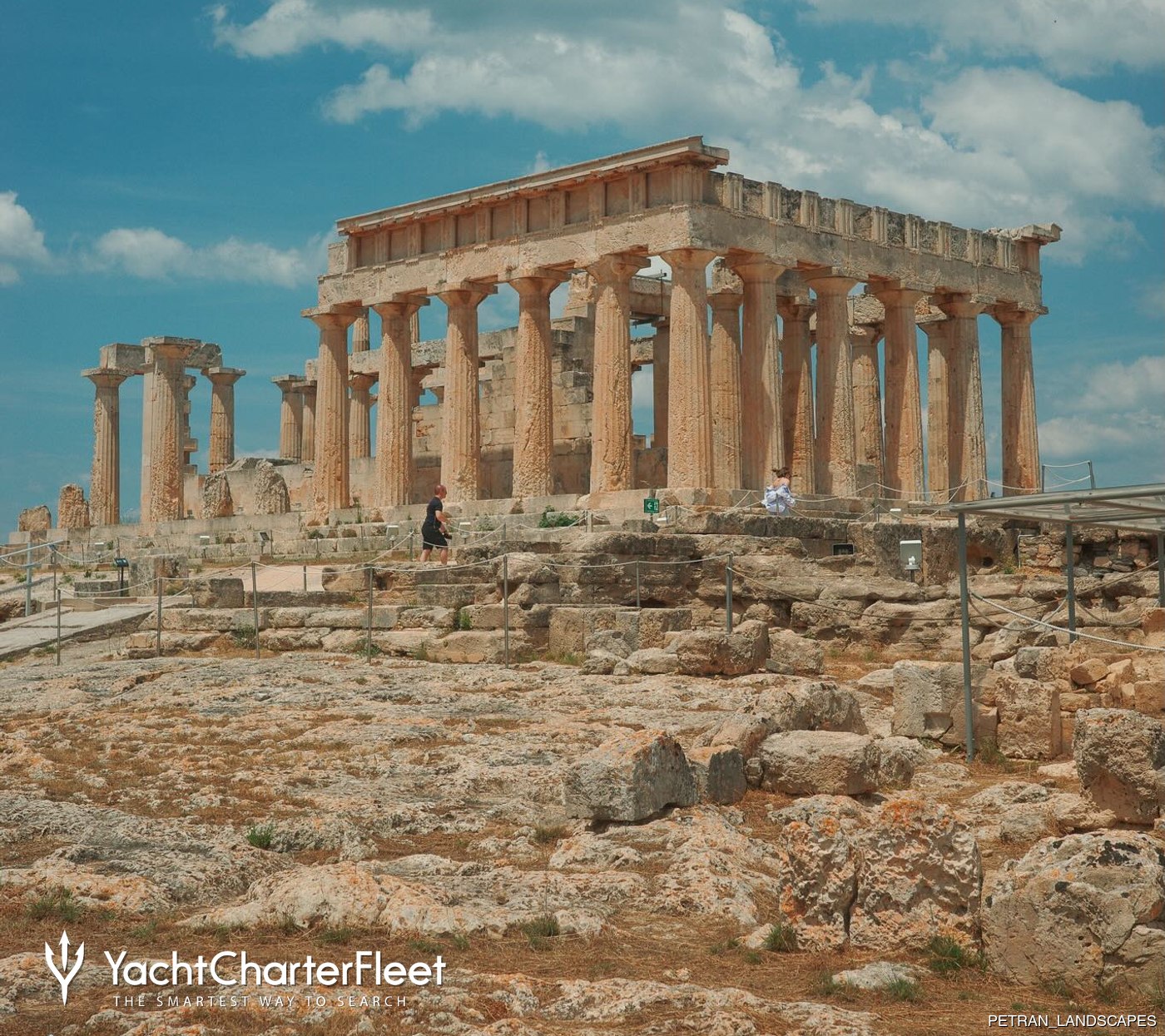
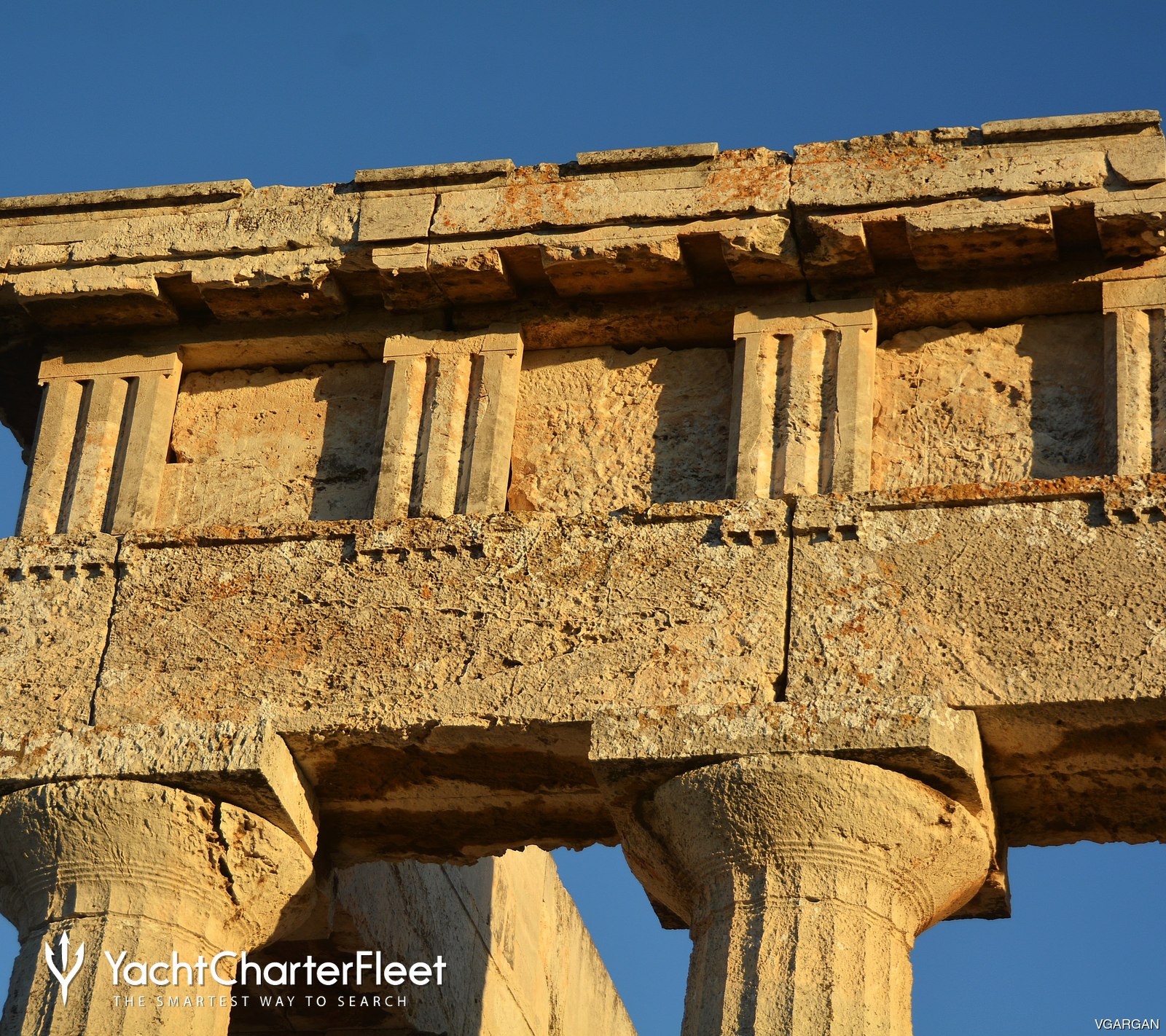
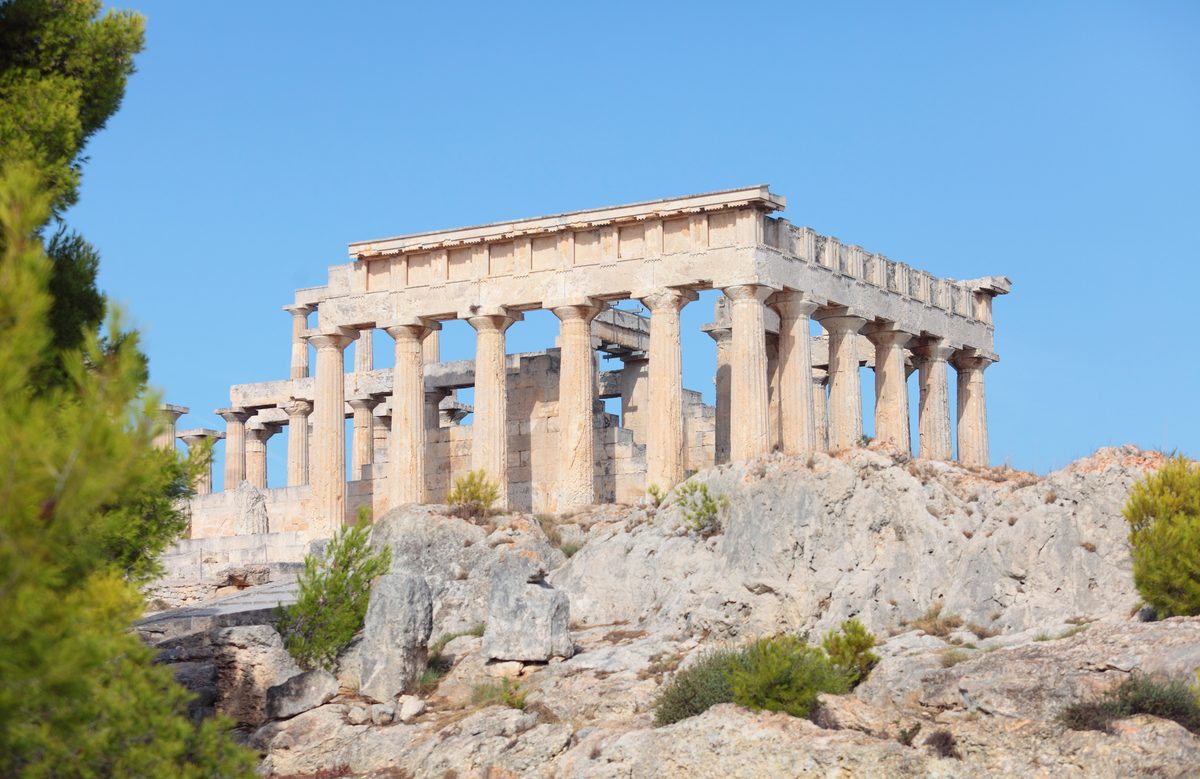
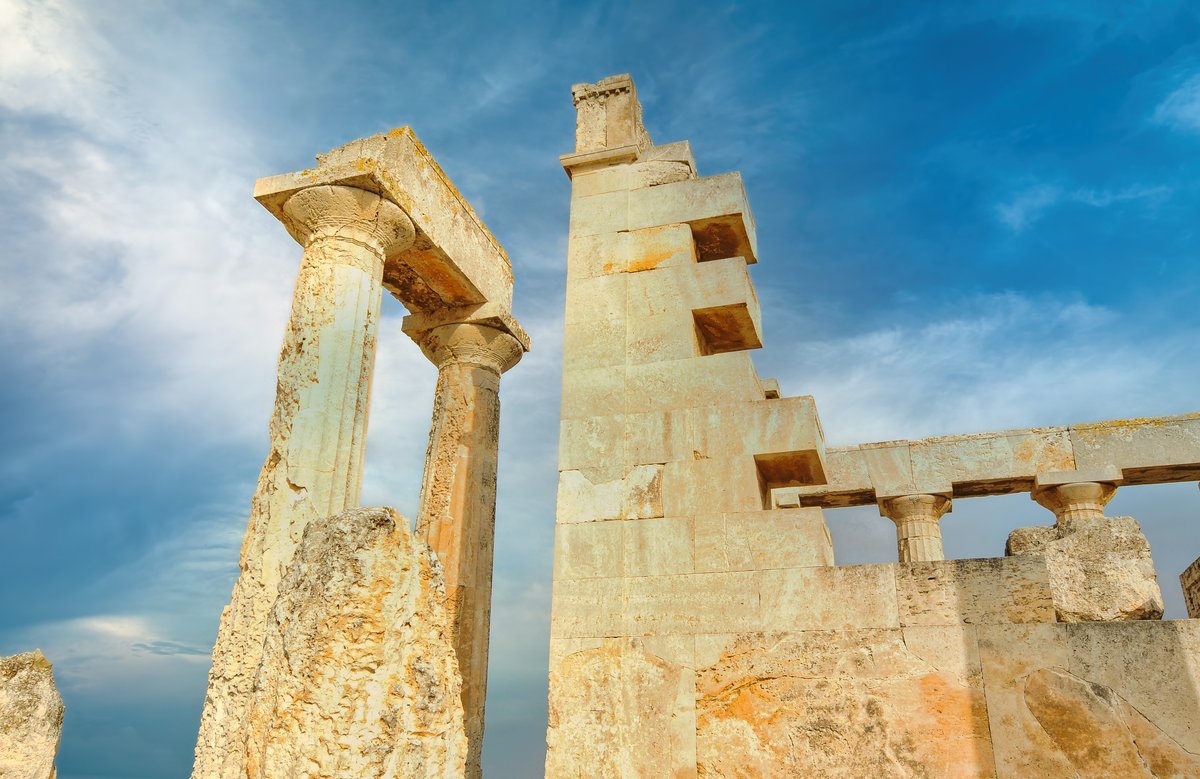
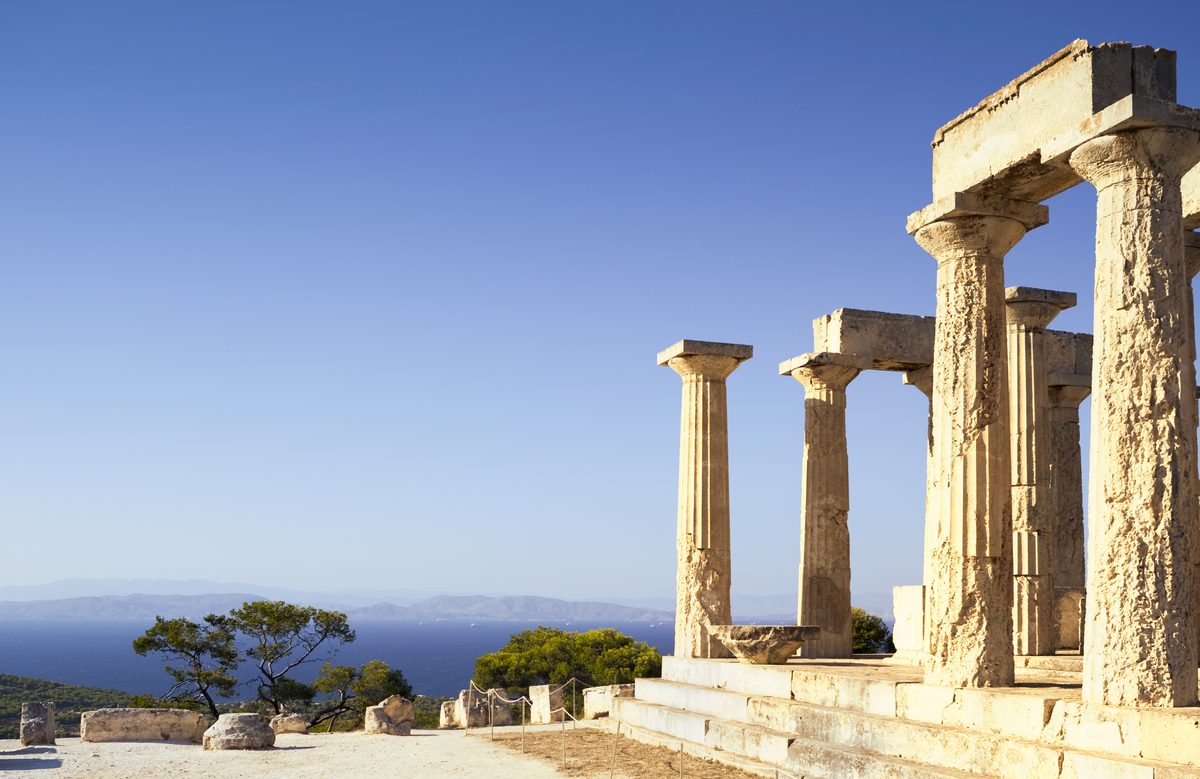
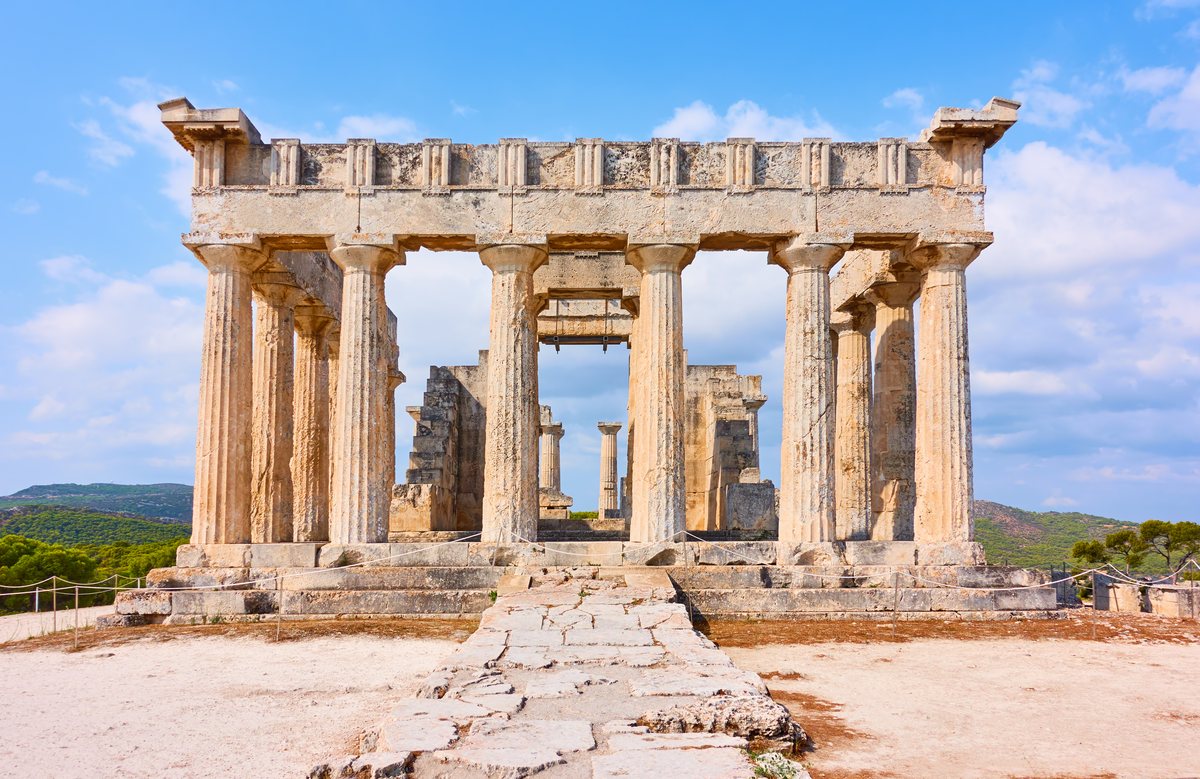
Architecturally, the site marks a transitional phase between late Archaic and early Classical Doric styles in ancient Greece. Constructed on a paved stone terrace measuring 15 by 30 meters, the primary building once held 32 outer columns, 25 of which remain upright today. Local limestone formed the core structure, which craftsmen coated in smooth white plaster and detailed with bright painted trim.
Inside the central chamber, two internal rows of smaller double-tiered columns held up a wooden roof structure, adding surprising interior height. A formal front porch and a secluded rear room completed the balanced floor plan, influencing sanctuary design across regional Greek territories.
Geographically, the sanctuary forms an exact geometric alignment with the Parthenon in Athens and the Temple of Poseidon at Sounion, a layout known as the Sacred Triangle. Navigating between these ancient coastal monuments on a Greece yacht charter demonstrates how classical builders integrated sacred architecture directly into the marine landscape.
Inspiration for Greece yacht charters
-
 The top 6 historical sites to visit on a Greece yacht charter in the Cyclades On a Greece yacht charter vacation, you'll find some of the country's most important archaeological sites around the Cyc ...
 -
 The Ultimate Guide To Wreck Diving In Greece No doubt one of the most fun things to do whilst away on a luxury yacht charter, diving allows you to get the very most ...
 -
 5 amazing blue caves you have to visit during a Greece superyacht charter Abounding in natural beauty, Greece offers numerous awe-inspiring formations and unforgettable landscapes, including spe ...
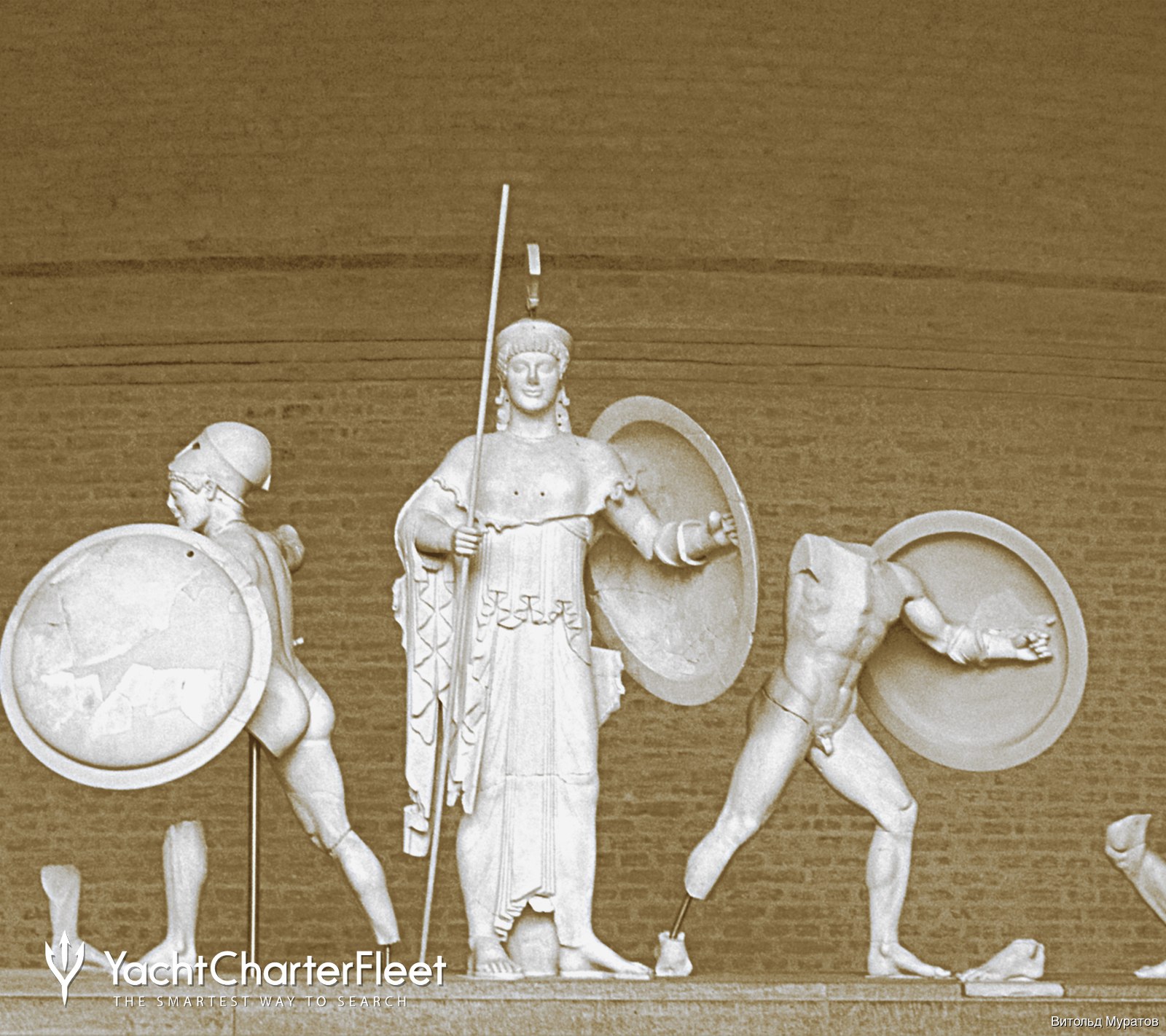
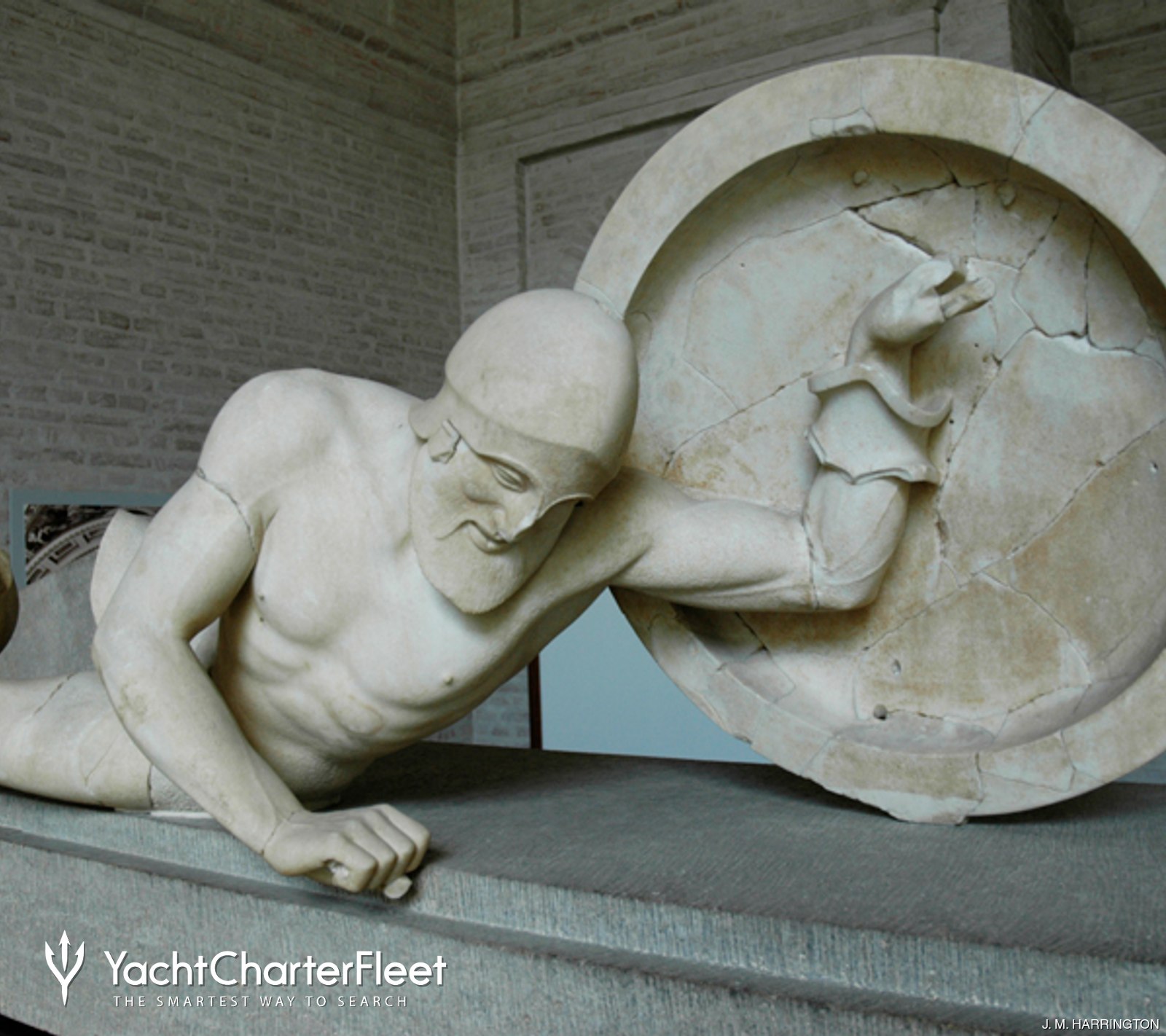
Intricate marble sculptures once filled the triangular gables at either end of the Temple of Aphaia, illustrating key battles from the Trojan War. These carved pediment figures highlighted legendary local heroes like Telamon and Ajax fighting beside Heracles, asserting Aegina's cultural importance within wider Greek mythology.
Although the original pediment marbles now reside in Munich's Glyptothek museum, exploring the open-air colonnade on the hilltop offers an immersive connection to the past. Planning an onshore stop during a private yacht charter allows time to combine a walk through the ruins with a swim along the rocky coves nearby.
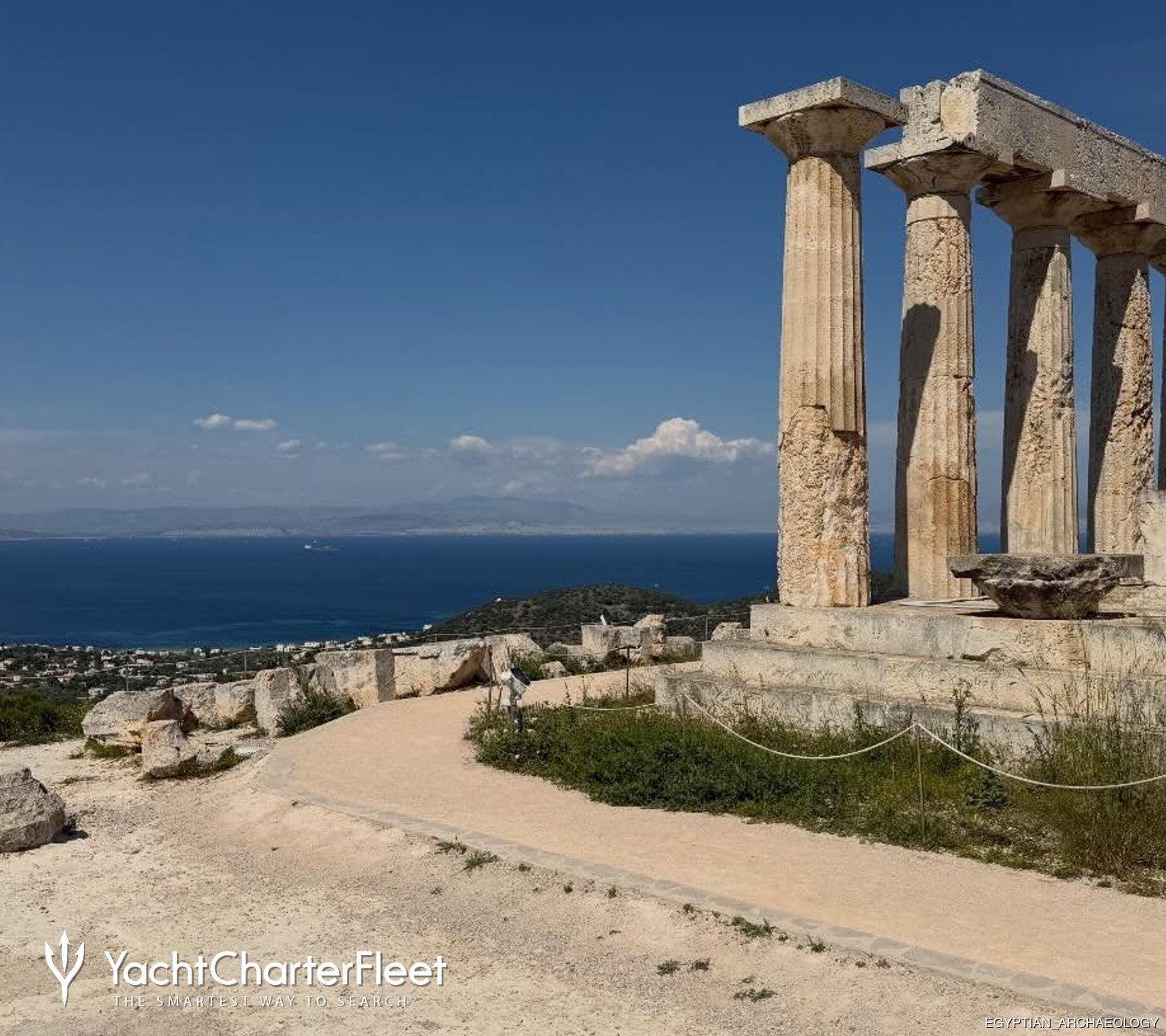
A small museum on the sanctuary grounds displays excavated pottery, carved stone fragments, and painted entablature pieces recovered during archaeological digs. Marked footpaths lead past ancient sacrificial altars, stone storage cisterns, and a restored ceremonial entrance gateway framed by aromatic pine trees.
Visiting during the late afternoon offers cooler breezes and softer sunlight across the ancient stone columns. Adding Aegina to a broader Mediterranean yacht charter itinerary brings a rewarding mix of historical exploration and quiet coastal relaxation. After spending time at the hilltop ruins, visitors can head down to the harbor to sample local pistachios and fresh seafood at a waterfront taverna.
To arrange private shore transportation and incorporate this historic sanctuary into your voyage, consult a knowledgeable yacht charter broker. Coordinating timed harbor dockage in Agia Marina and securing private ground transfers up the hill eliminates travel delays when visiting the ruins. Aligning your shore excursion with optimal afternoon lighting and local site hours keeps the experience relaxed and unhurried.
Stop reading and start planning. Speak to a yacht charter broker today.