Just outside the seaside town of Nerja lies one of southern Spain's most fascinating landmarks. The Cueva de Nerja is a vast cave system known for its geological formations and prehistoric cave art. Spanning nearly five kilometers, the cave draws guests from around the world with its cathedral-like chambers and towering stalactites and stalagmites.
Discovered in 1959 by a group of young locals, the cave has become one of the most important archaeological and natural sites in the region. While only a portion of the cave is open to the public, the accessible areas offer a journey through ancient history and underground beauty. It is a place where science, history, and nature intersect.
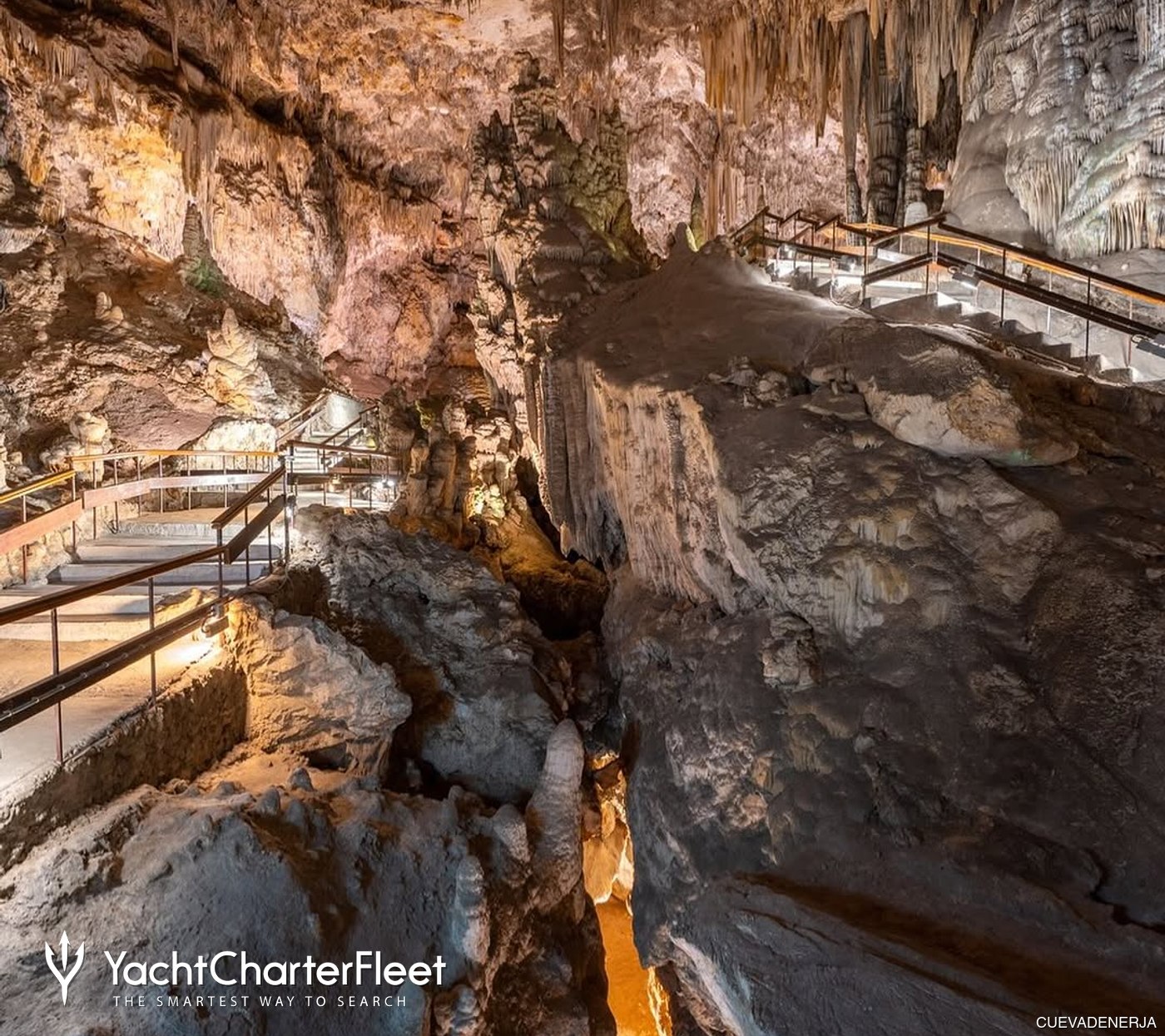
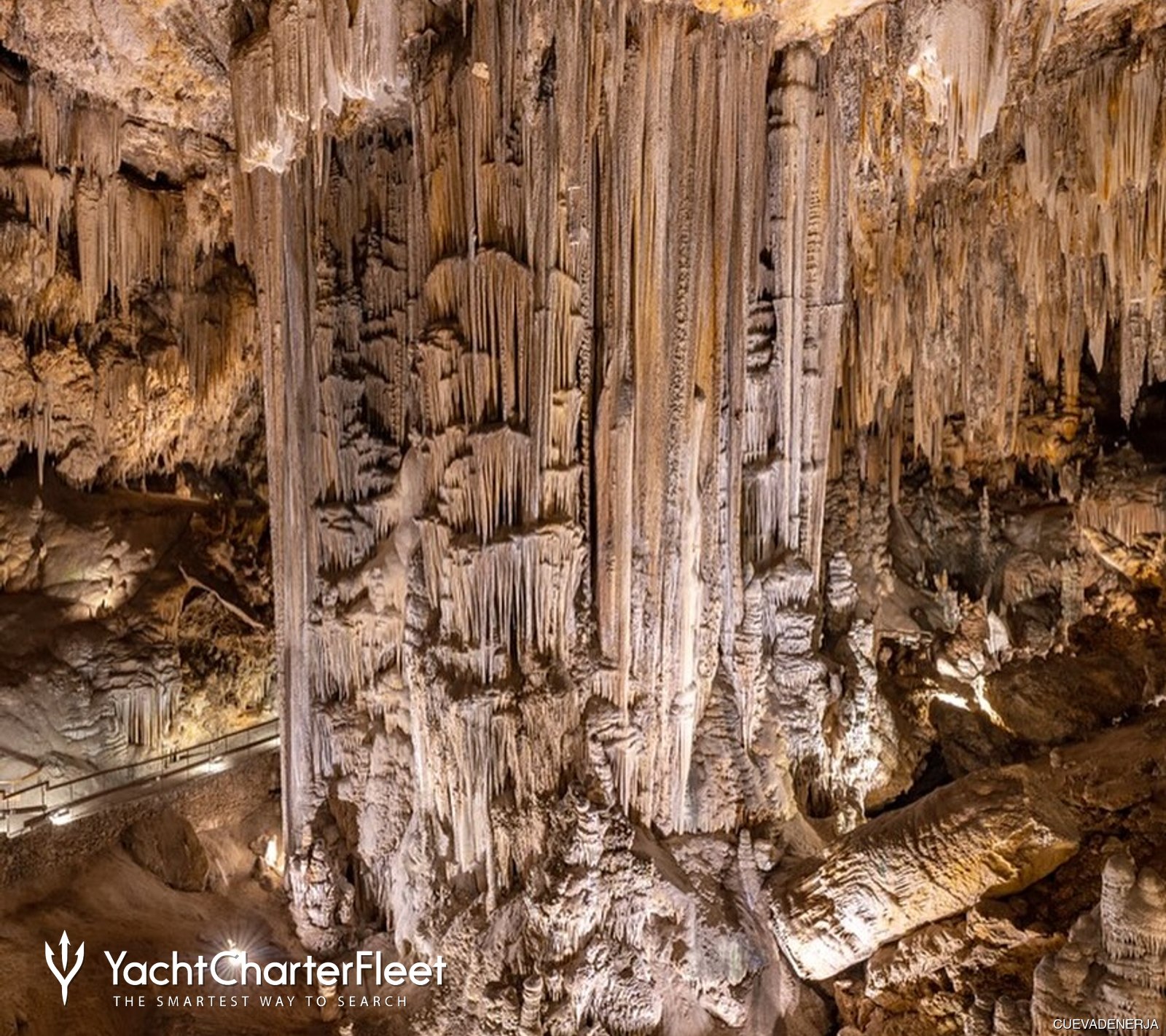
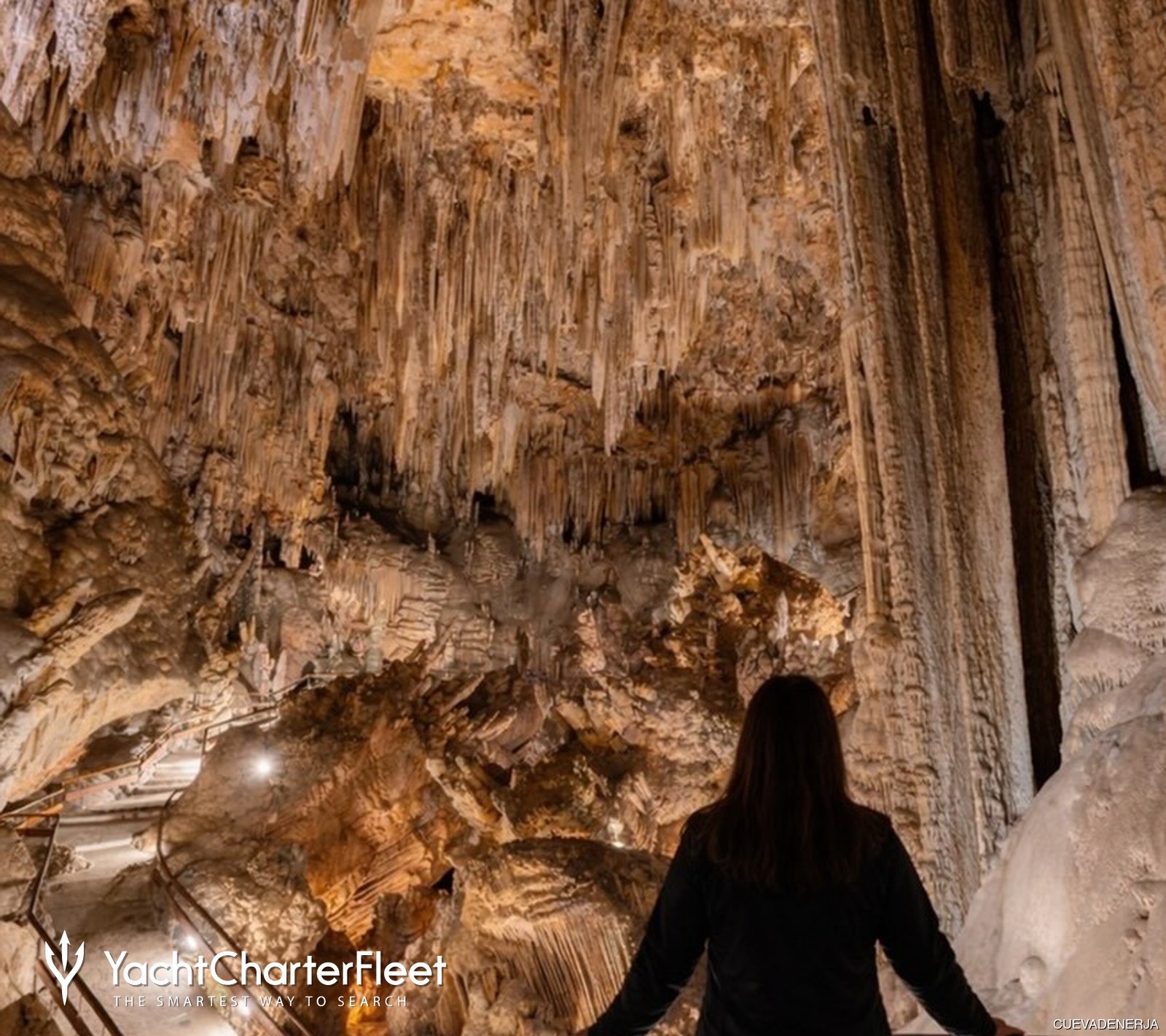
Visitors can explore the cave through well-lit pathways that pass through expansive galleries. Some of the chambers rise to over 30 meters high, creating dramatic spaces filled with natural sculptures. The Hall of the Cascade, the Hall of the Cataclysm, and the Hall of the Ghosts each offer unique views and acoustics. Exploring these subterranean wonders is a frequent highlight for those on a Spain yacht charter who wish to see the natural diversity of the Andalusian coastline.
One of the key draws is the prehistoric cave art, which includes some of the oldest known depictions created by early humans. These paintings, located in the restricted areas of the cave, add deep historical value to the experience. Their existence shows that this cave was not only a natural shelter but also a place of expression for early societies.
The cave also hosts occasional live performances, taking advantage of its natural acoustics. Music and dance events in the central chamber give a different perspective on this natural setting, blending culture with geology. This cultural significance is often a point of interest for anyone on a Mediterranean yacht charter touring the ancient landmarks of the Alboran Sea.
Inspiration for Mediterranean yacht charters
-
 Deep dive: 10 of the best dive spots in the Mediterranean The Mediterranean is a dream destination for scuba divers, with countless diving sites peppered along the coast which pr ...
 -
 12 unique beaches to visit on your Mediterranean yacht charter From pink sands to unique rock formations, the Mediterranean has no shortage of interesting and impressive beaches to vi ...
 -
 9 of the best Mediterranean beach clubs to visit by superyacht From iconic venues in the French Riviera to happening hangouts in Ibiza, superyacht charters in the Mediterranean can ma ...
The Fundación Cueva de Nerja oversees the site, supporting research, conservation, and public education. An on-site museum provides insight into the cave's geology and history, with exhibits on archaeological discoveries and natural formations.
Interactive displays and multimedia elements make the experience more engaging, especially for families. The foundation also partners with universities and researchers, keeping the site active in scientific study. Outside, visitors can enjoy landscaped paths, viewing platforms, and picnic spots. Information panels share details about the region’s natural and cultural background.
Located around 50 minutes from Malaga, the cave is easy to reach by car. It is a well-visited site, so advance booking is a good idea during peak months. Many guests choose to arrange a Malaga yacht charter that includes shore excursions to Nerja, as the cave is one of the most significant landmarks in the area.
The walkways are suitable for most age groups, with clear signage and resting points. Wear sturdy shoes and bring a jacket, as it stays cool inside year-round. Photography is allowed in most areas, though flash is not permitted. Some steps and uneven surfaces are present, so visitors should take care when moving through the chambers. On-site cafés and shops make it convenient to relax before or after your tour.
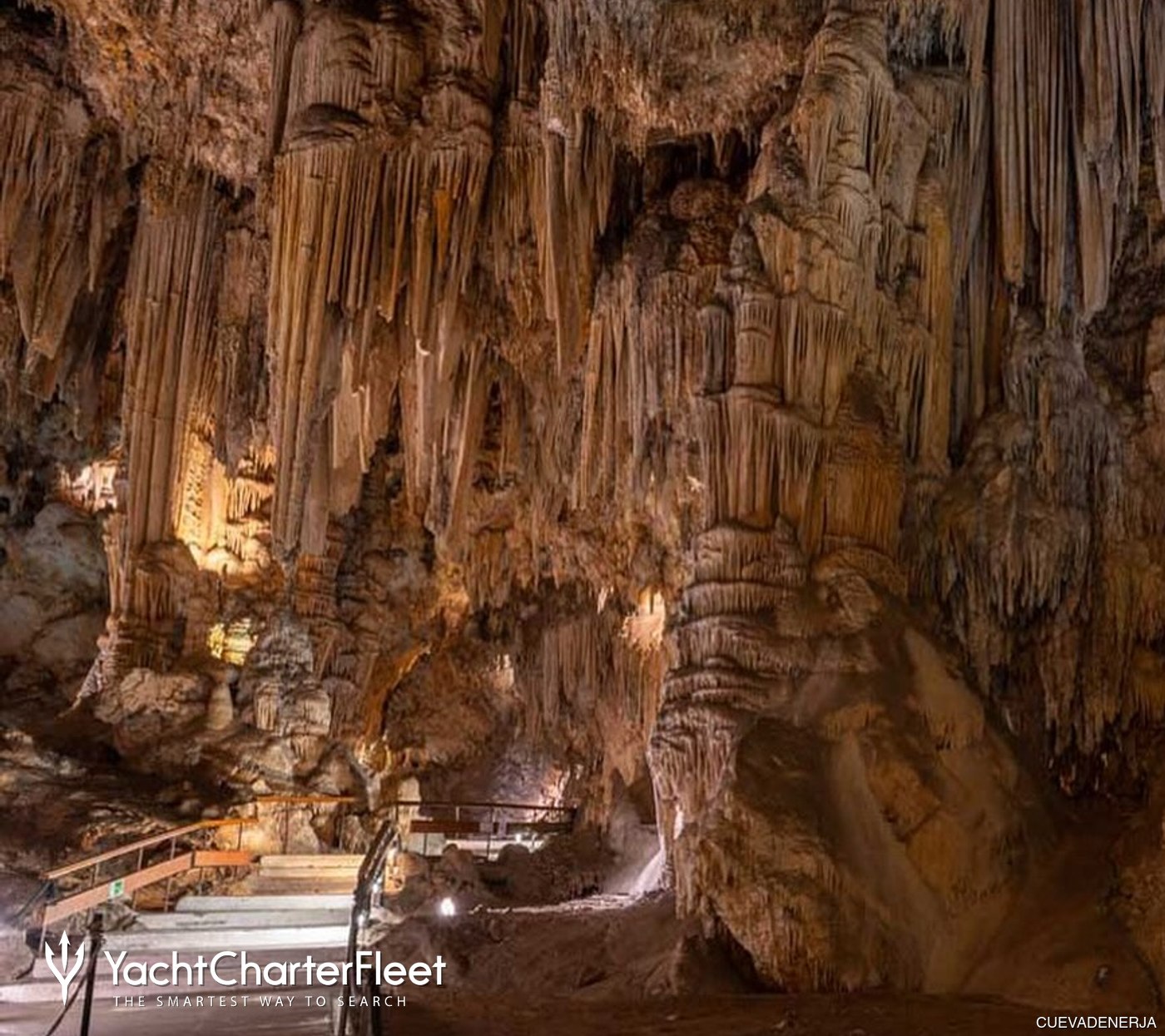
For guests arriving by boat along the coast, a trip to the Cueva de Nerja offers a chance to experience something completely different. Exploring the region with a private yacht charter allows for a flexible schedule, where a morning of coastal cruising can be balanced with an afternoon exploring the depths of the earth.
Speak to a professional yacht charter broker to include Cueva de Nerja in your next itinerary. They can coordinate your arrival in the nearby marina and arrange for local transport, ensuring your visit to this geological landmark is integrated seamlessly into your journey.