At the center of Mandalay lies a vast square complex surrounded by a moat and high walls. This is the former royal residence built during the reign of King Mindon in the mid-19th century. The palace complex was once the political and cultural core of the Konbaung Dynasty, Myanmar's last royal lineage.
Mandalay Palace was designed with symmetry and structure in mind. The layout follows traditional Burmese palace architecture, where buildings are arranged in a precise grid. The palace grounds were meant to reflect a cosmological order, giving insight into how power and spirituality were connected in the Burmese court.
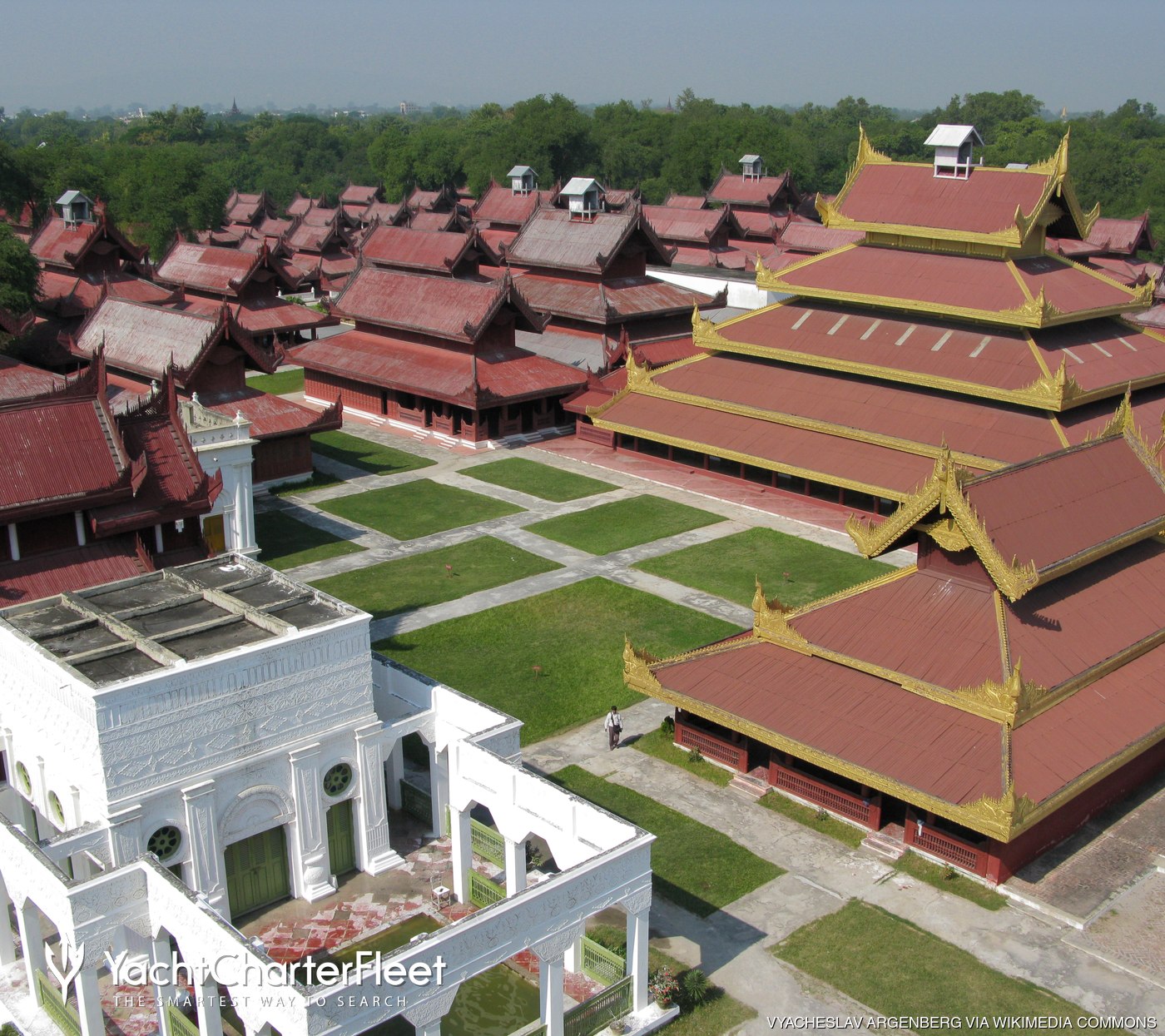
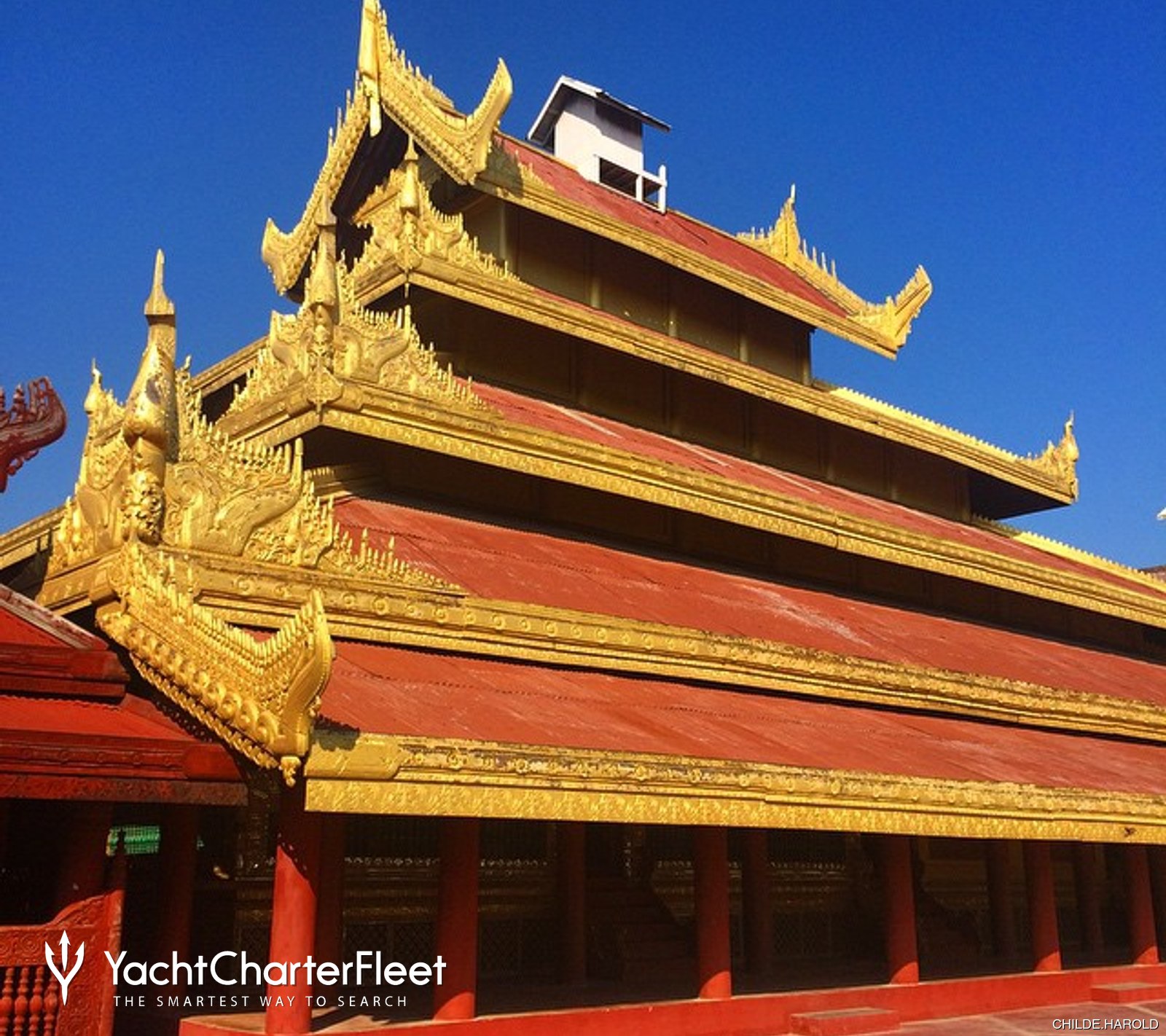
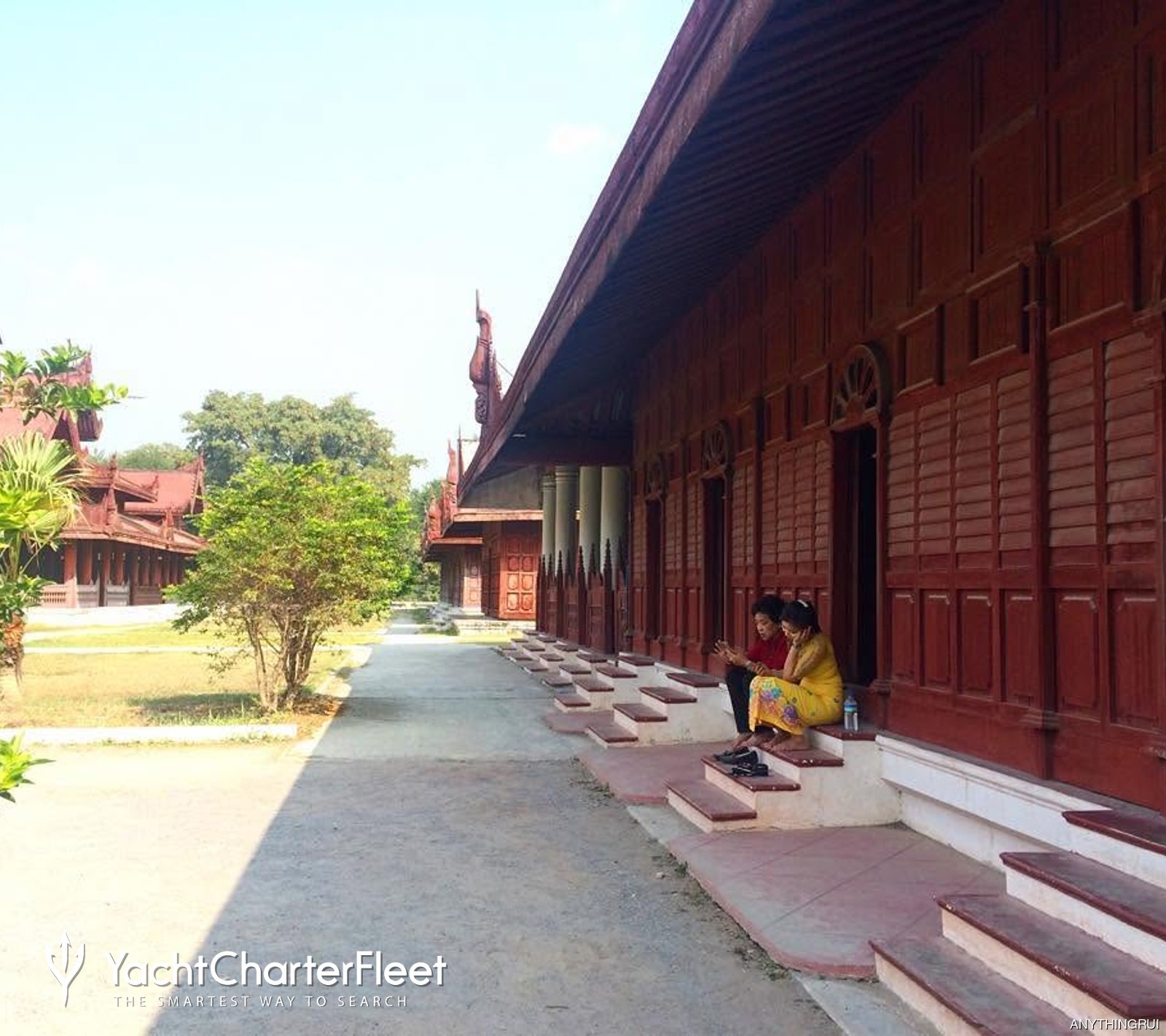
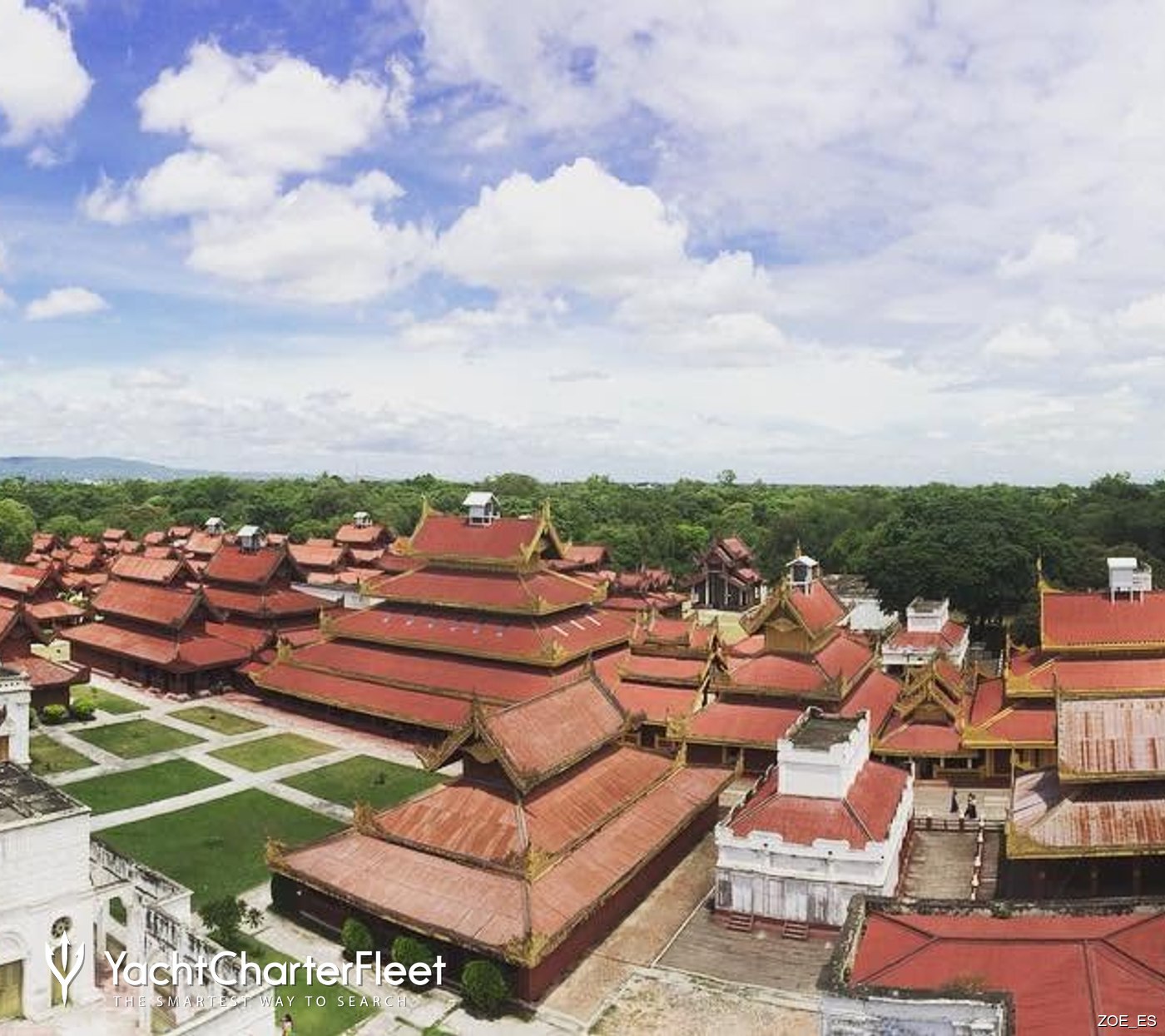
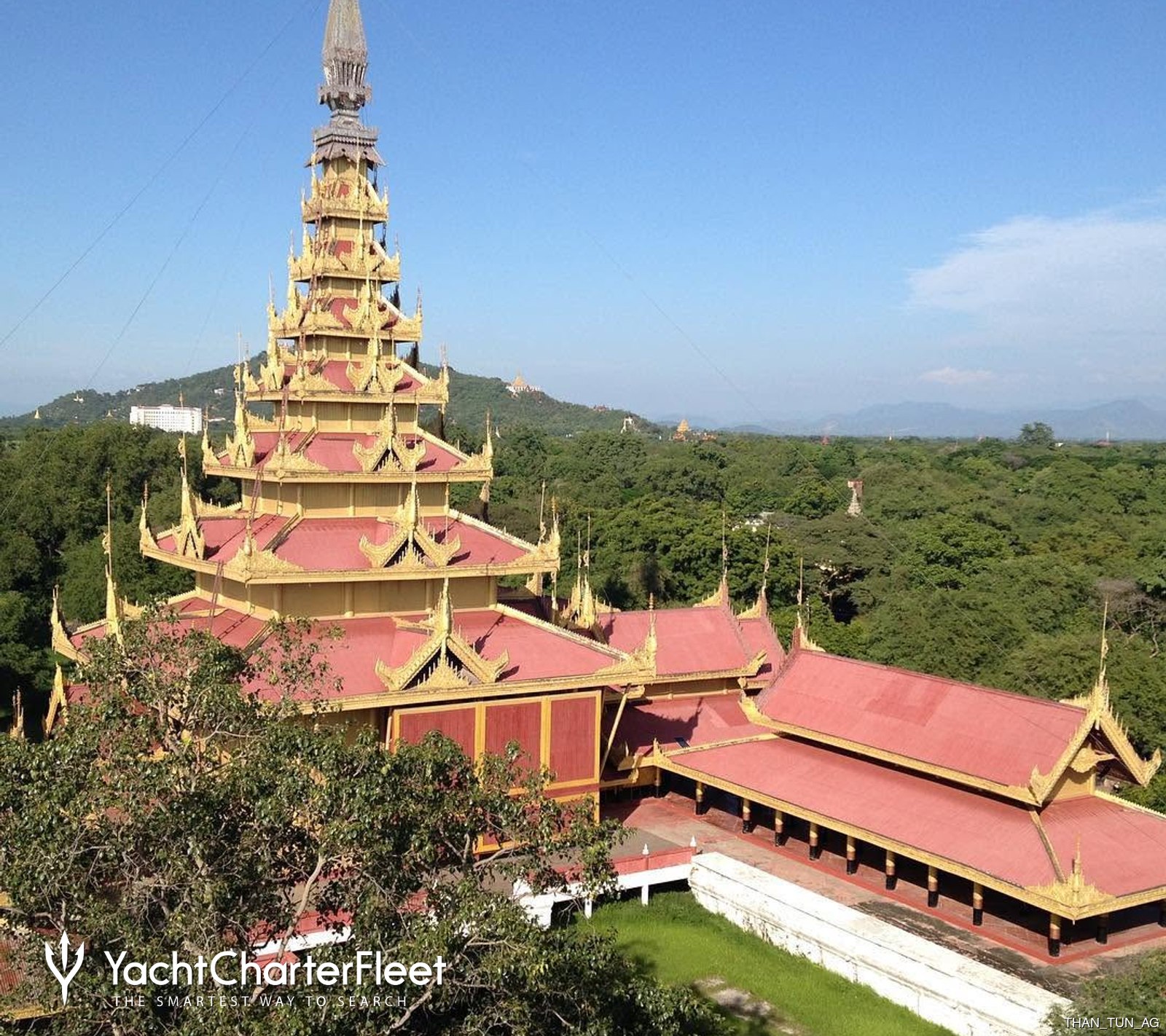
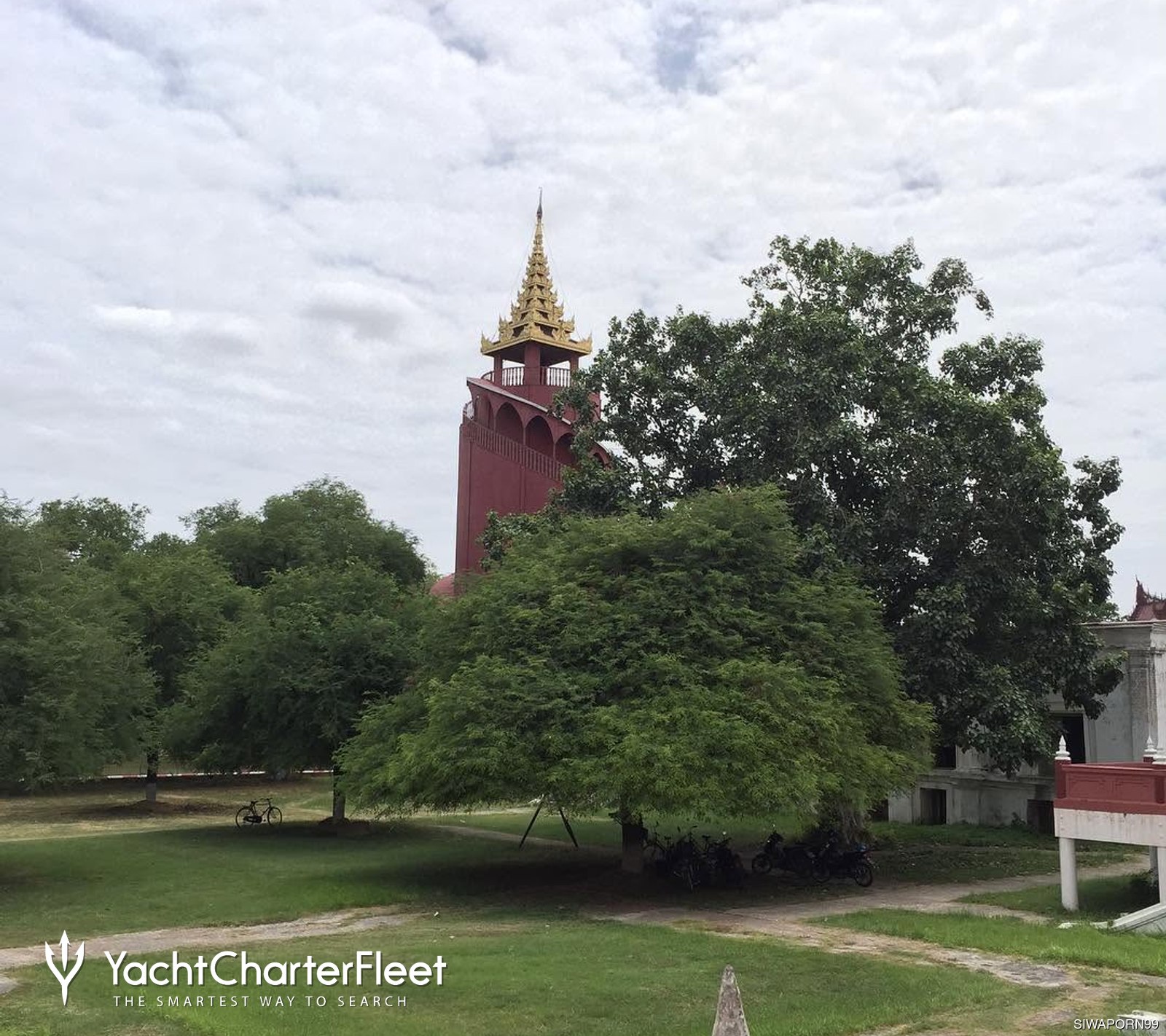
The complex includes multiple halls, pavilions, and courtyards, each with its own purpose. There are throne rooms used for different ceremonies, residential quarters, audience halls, and watchtowers. One of the most recognizable structures is the wooden watchtower that still offers a panoramic view over the grounds.
The buildings were originally constructed using teak wood with tiered roofs and golden ornamentation. Although much of the palace was destroyed during World War II, it was reconstructed in the 1990s using traditional methods. Today, the restored palace gives guests a sense of what the royal capital once looked like. This focus on heritage and grand design is a frequent interest for those on a South East Asia yacht charter, where the journey often involves exploring the architectural evolution of the region.
Guests enter through one of the gates guarded by military personnel, as the compound also contains an army base. Once inside, the restored buildings create a peaceful atmosphere, though the space remains largely open and unshaded. The central palace building houses displays of royal regalia, historical timelines, and cultural artifacts.
Exhibits include replicas of thrones, ceremonial costumes, and items that tell the story of court life. While many of the original objects were lost, these reconstructions help paint a picture of the daily routines and traditions of the royal family. This cultural depth is a highlight for those on a sailing yacht charter, providing a sophisticated contrast to the natural beauty seen at sea.
Inspiration for a South East Asia yacht charter
-
 The Ultimate Guide to Luxury Yacht Charters in South East Asia South East Asia is a melting pot of exotic cultures and multiple island chains, offering a rich palette of cruising oppo ...
 -
 6 of the Top Things to do on a Thailand Yacht Charter From its backdrop of gold-topped temples to its bountiful marine life awaiting discovery from your swimming platform, a ...
 -
 6 of the Best Beaches to Visit on a Thailand Luxury Yacht Charter With crystal-clear tropical waters, mystical rock formations and a myriad of unspoiled islands, the Andaman Sea on the w ...
The palace is surrounded by other significant sites, including Mandalay Hill, the Kuthodaw Pagoda, and various monasteries. Each of these plays a role in the city’s spiritual and historical landscape. For guests on a Myanmar yacht charter, an inland visit to this cultural hub provides a deep historical perspective that complements the natural beauty of the coastline.
Mandalay itself was built to be a centre of Buddhist learning and administration. The decision to move the capital there was driven by both spiritual and strategic reasons. As a result, the area around the palace reflects the blend of religious devotion and royal authority.
It is best to explore the palace early in the day before the heat becomes overwhelming. Guests should bring sun protection and water, as much of the walking is done under open skies. Guided tours are available and can provide deeper context about each structure and its use.
Photographers will appreciate the scale and symmetry of the layout. The watchtower offers a vantage point, especially in the late afternoon when the sun casts warm light over the grounds.
For those travelling through Myanmar on a luxury holiday, Mandalay Palace offers a meaningful stop. It provides a clear link to the country's royal past and cultural identity. After experiencing the palace, guests often continue their journey along the Irrawaddy River. It is at this stage that a private yacht charter becomes the perfect way to move onward in comfort and style. Gliding past ancient cities and riverside temples, travellers can take in the changing landscape while enjoying high-end service.
To include Mandalay and its palace in a tailored itinerary, speak to a yacht charter broker who can help coordinate both inland excursions and river-based travel.